

This July, the DCMP will share some previous posts that you might have missed or would just like to hear again! A new theme begins in August.
Published November 19, 2016
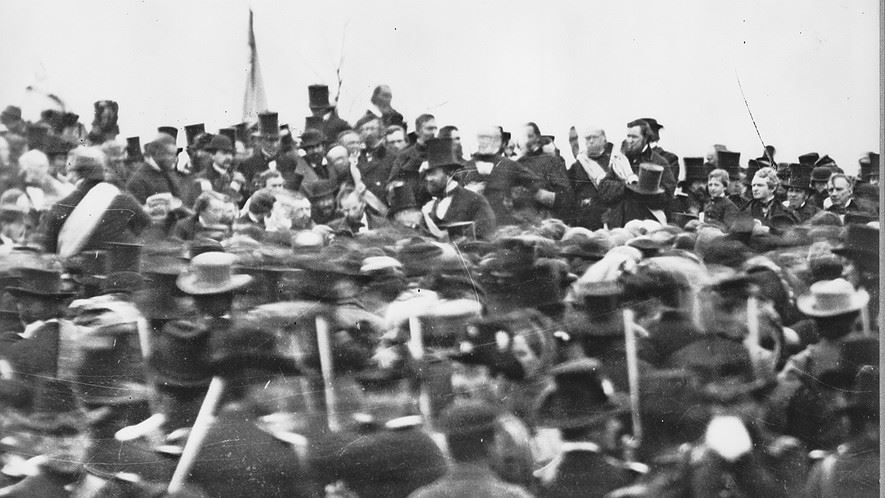
On the afternoon of 19 November 1863, Abraham Lincoln delivered what at the time was seen as an extremely terse speech; it has become one of the most important speeches ever given in American history.
Symphony No. 6 “Gettysburg”: Conflict
Beginning “Four score and seven years ago,” Lincoln did what he wanted to do at Gettysburg; “government of the people, by the people, and for the people” inspired many not just in the then-divided United States but also around the world.
The American composer Roy Harris (1898–1979) wrote a great deal of music on American subjects. He was actually born on Abraham Lincoln’s birthday, and often talked about how he, like Lincoln, was born in a log cabin. Although he wrote in many different genres, he is best known for his symphonies.
Harris’s 6th symphony is titled “Gettysburg.” The four movements are I. Awakening, II. Conflict, III. Dedication, and IV. Affirmation.
My classical music post for today is Roy Harris’s Symphony No. 6, “Gettysburg”: II. Conflict.
Four score and seven years ago our fathers brought forth on this continent, a new nation, conceived in Liberty, and dedicated to the proposition that all men are created equal.
Now we are engaged in a great civil war, testing whether that nation, or any nation so conceived and dedicated, can long endure. We are met on a great battle-field of that war. We have come to dedicate a portion of that field, as a final resting place for those who here gave their lives that that nation might live. It is altogether fitting and proper that we should do this.
But, in a larger sense, we can not dedicate—we can not consecrate—we can not hallow—this ground. The brave men, living and dead, who struggled here, have consecrated it, far above our poor power to add or detract. The world will little note, nor long remember what we say here, but it can never forget what they did here. It is for us the living, rather, to be dedicated here to the unfinished work which they who fought here have thus far so nobly advanced. It is rather for us to be here dedicated to the great task remaining before us—that from these honored dead we take increased devotion to that cause for which they gave the last full measure of devotion—that we here highly resolve that these dead shall not have died in vain—that this nation, under God, shall have a new birth of freedom—and that government of the people, by the people, for the people, shall not perish from the earth.


Leave a Reply