

“The world’s favorite season is the spring.”—Edwin Way Teale
Frühlingslied / Spring Song, Op. 28 No. 5
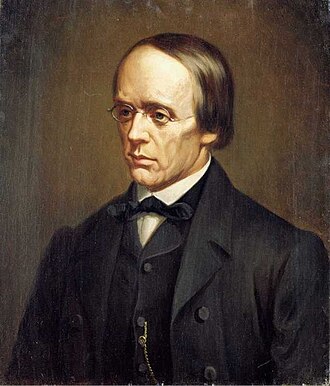
The Norwegian composer Halfdan Kjerulf (1815–1868) is not particularly well known, although really he should be. Much of his music has a strong national feel and is quite beautiful. Edvard Grieg was one of Kjerulf’s admirers, and his Lyric Pieces are based on Kjerulf’s piano music. Kjerulf was influenced by French composers, particularly Berlioz, with whom he became acquainted when he traveled to Paris in 1840. Kjerulf also was influenced by Schumann and Chopin.
Kjerulf was only 52 when he died of tuberculosis. It is possible that he might have made more of an impact on the Norwegian classical music scene if he had not died so young. Roz Trubger said, “Kjerulf felt disadvantaged by living in Norway. Aged 23, he wrote ‘I am a dark, rather dismal little fellow, sickly and ill-equipped to overcome disappointments and adversity. I have a talent for only one thing—music; but this icy, poverty-stricken Norway cannot nurture this talent. There is no hot-house here and the North wind blows so sharp and cruel that it kills off the tender little plant.’ Four years before that statement, he had graduated as a lawyer.” Eventually, though, he studied composition in Paris and Leipzig, and
Kjerulf’s Frühlingslied (Spring Song), Op. 28, No. 5 of his 6 Skizzen (6 Sketches, 1849–1859), is actually a very gentle and sweet work from a composer who did not see himself as either. As with much of his output, this was composed for piano. He also composed part-songs, including some in honour of Norway, and he also is credited with introducing composers such as Ludwig van Beethoven to Norway.
My classical music post for today is Halfdan Kjerulf’s Frühlingslied.


Leave a Reply