

“The world’s favorite season is the spring.”—Edwin Way Teale
Elisabeth Schwarzkopf – Im Frühling (Schubert)
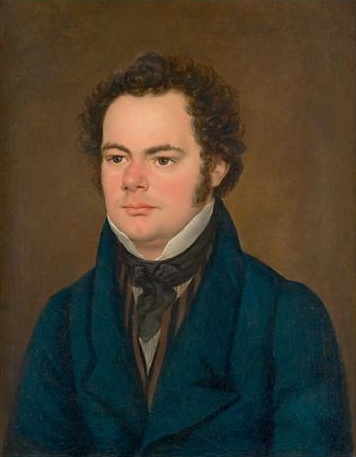
The Austrian composer Franz Schubert composed the beautiful Lied “Im Frühling” (”In Spring”) in 1826, to a poem by Ernst Schulze. This is just one of a set of ten songs that Schubert set to Schulze’s poetry.
The Lied is a sort of theme and variations, and, as the poem is all about nostalgia for happy events now long gone, the idea of “the same, yet different” works incredibly well, particularly in the accompaniment. Graham Johnson has said of this Lied, “It is all an evanescent dream, fleetingly conjured and dying with the last wistful notes of the postlude. Schubert’s use of modified strophic form was seldom so virtuosic, and the Lied has seldom attained such perfection.”
The blogger Wehmet2000 said, “The mood of the song is somewhat ambiguous. It is not a happy song, nor is it a sad song. The song embodies the emotion of Sehnsucht, which is the German word for longing, a key emotion of romanticism. The singer recalls a beautiful springtime experience and would like to have it back. The final stanza is not hopeful, but there is a kind of wistfulness and a bittersweet pleasure in the memory. . . . Some singers try to give the song a “happy ending” by raising their volume on the repetition of “Den ganzen Sommer lang,” the final line of the singer’s text. This does not correspond to the mood of the song.”
My classical music post for today is Franz Schubert’s “Im Frühling.”


Leave a Reply