

Chamber music, sometimes described as “the music of friends,” is generally used to refer to music composed for a small group of instruments or voices, with one performer to a part. The intimacy of chamber music makes it a perfect genre for compositions marking important events or for unusual combinations of instruments. This April, the Daily Classical Music Post will introduce you to some of these very special works.
I love all kinds of music, but if I had to choose one type to listen to for the rest of eternity, antiphonal brass music would definitely be a contender. And I would choose the compositions of the Italian composer Giovanni Gabrieli (c. 1554/1557–1612), in whose hands the polychoral style reached a peak.
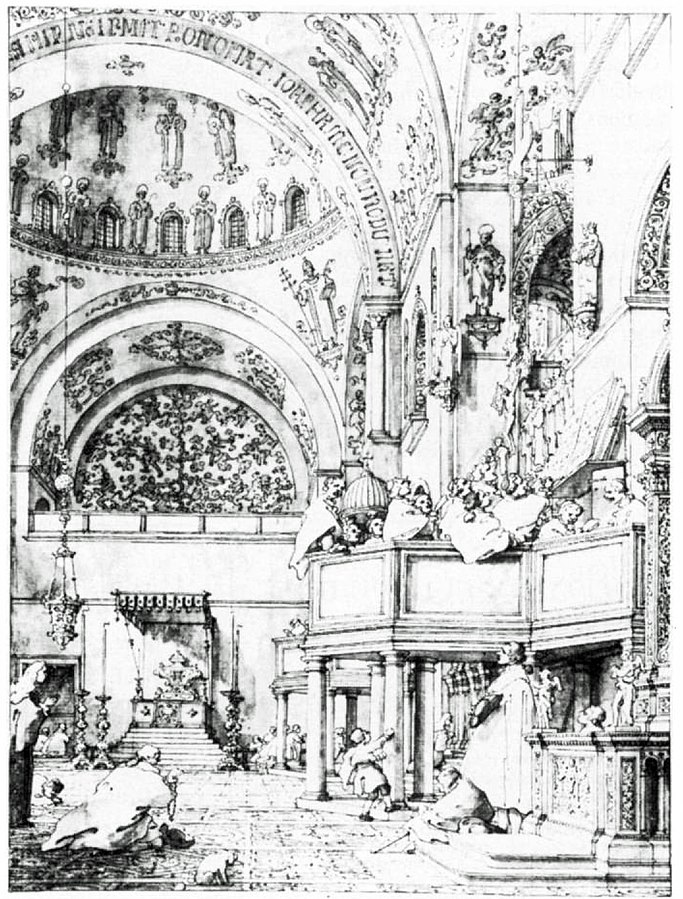
It helped that Gabrieli was a Venetian and so had the extraordinary building of Basilica San Marco with its amazing acoustics to write for. He had a fantastic musical upbringing, studying with his uncle Andrea Gabrieli as well as Orlando de Lassus. He was organist at San Marco and became the principal conductor following his uncle’s death. He also was organist at the Scuola Grande di San Rocco.
There are composers who compose for specific spaces; Gabrieli was a master at this. He carefully planned the instrumentation and placement of all musicians for each piece, and he always gave precise directions in the score. Occasionally, the score will look strange, for example with a single string instrument playing at the same time as a full brass quintet. However, when placed in the exact locations specified by Gabrieli, the string instrument can be heard perfectly.
The opening of the Canzon Duodecimi Toni for two brass quintets is incredibly sumptuous. After an opening with both groups playing simultaneously, there is a typical echo and response section, and the work ends with both groups playing simultaneously. The programme notes from a performance a few years ago said, “Canzon duodecimi toni, from his Sacrae Symphoniae, uses two brass choirs which took full advantage of the space within the Basilica San Marco. Contrasting moments of majesty and introspection alternate within this work, creating a conversation between choirs and providing a unique and fascinating aural experience for the listener.”
My classical music post for today is Giovanni Gabrieli’s Canzon Duodecimi Toni.


Leave a Reply