

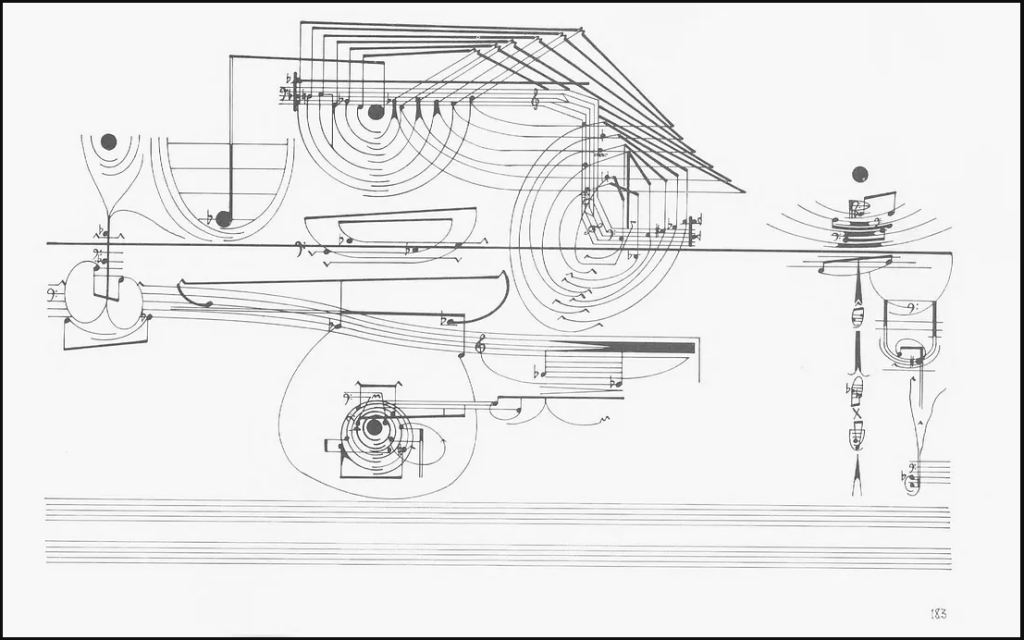
The medieval music theorist Guido d’Arezzo developed the four-line music staff—the precursor to the five-line staff—in or around the year 1024. Western art music notation as we know it today would not exist were it not for this revolutionary change. This February, the Daily Classical Music Post will explore music using interesting, unusual, and innovative music notation.
TREATISE Cornelius Cardew. KYMATIC ensemble8Q
The British experimental composer Cornelius Cardew (1936–1981) composed the 193-page-long Treatise in the mid-1960s using only lines, symbols, and shapes instead of musical notation. This is one of those pieces that is different every time it is performed. The ensemble is meant to begin by improvising but then practice enough times so that their performance is set by the time they actually present it to an audience.
By the 1970s, Cardew had given up composing experimental music, and he actually repudiated Treatise, although he didn’t remove it from publication or refuse any performances. He just didn’t want to have anything to do with it any more. It’s difficult to know if he would have revisited it later in life; he died in a car crash at the age of 45.
Although the entire score is graphical, there are two standard music staves at the bottom of every page. These staves are not to be interpreted literally. Apparently, Cardew put them there just so people would know that this was a musical score.
Today’s illustration is of page 183 of the score. Sonic Youth performed this single page on their album SYR4: Goodbye 20th Century (this album featured works by several avant-garde classical composers including John Cage, Steven Reich, and Christian Wolff).
My classical music post for today is Cornelius Cardew’s Treatise.


Leave a Reply