

Rosy Wertheim: Trois morceaux for flute and piano
In September 2023, North Carolina classical radio station WCPE created an uproar when the music director announced that they would ban broadcasts of several operas being performed by the Metropolitan Opera. It didn’t take many weeks for that decision to be reversed. Sometimes, however, it takes years or even generations for composers and music that has been banned to be heard. This November, the Daily Classical Music Post will look at some music that was banned for a wide variety of reasons.
Rosy Wertheim – Trois morceaux for flute and piano
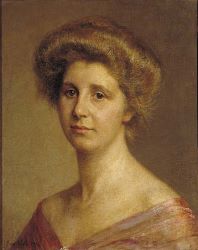
The Dutch composer Rosy Wertheim (1888–1949) was born into an affluent Jewish family. She was the first Dutch woman composer to complete a professional music education and gain international acclaim. She spent some time during the 1920s and 1930s in Paris, where several of her more well-known works were composed and performed. But when she returned to Amsterdam at the end of the 1930s, the Germans were already there, banning the performance of music by Jewish composers and threatening their lives. Wertheim fell ill right after the end of the war and although she taught music for a few years, her zest for composing was gone. She never wrote anything again.
Eleanor P said, “During the German occupation, Rosy initially continued organizing house concerts, under risky circumstances. The concerts consisted mainly of music by Jewish composers which had become forbidden by the occupying forces. In September 1942, Wertheim went into hiding in Amstelveen and subsequently several other villages in the countryside. It was difficult for her to be locked up and sometimes she brought herself and others into great danger.”
Rebecca Lynn Poole said of Wertheim’s Trois morceaux for flute and piano, composed in 1939, right after she moved from Paris to Amsterdam, that it “embodies many of the characteristics seen in the French aesthetic of the time. It has formal simplicity, rapid changes in textures and tonalities, and playful topics that correspond with her movement titles. The style of Milhaud and Les Six can be seen in many aspects of this work.”
My classical music post for today is Rosy Wertheim’s Trois morceaux for flute and piano.


Leave a Reply