

Michael Praetorius: In dulci jubilo
First posted 16 February 2016
This February, the Daily Classical Music Post will celebrate 17th-century composers!
Polyhymnia Caduceatrix et Panegyrica: No. 43, In dulci jubilo
Stephen Rhodes said, “For centuries, the trumpet was considered an instrument exclusive to the court, specifically the property of the ruler of highest rank who was usually the king. During the Baroque era the art of trumpet playing evolved to a high level of technical virtuosity achieved by a select group of players who maintained their exclusivity through guild membership. . . . Holy Roman Emperor Ferdinand II decreed in [1623]: No honourable trumpeter or timpanist shall allow himself to be employed with his instrument in any way other than for religious services, Emperors, Kings, electors and Princes, Counts, Lords and Knights and nobility, or other persons of high quality: It shall also be forbidden altogether to use a trumpet or a timpani at despicable occasions; likewise the excessive nocturnal improper carousing in the streets and alleys, in wine and beer houses. He who transgresses in this way shall be punished.”
I guess these prohibitions didn’t last too long!
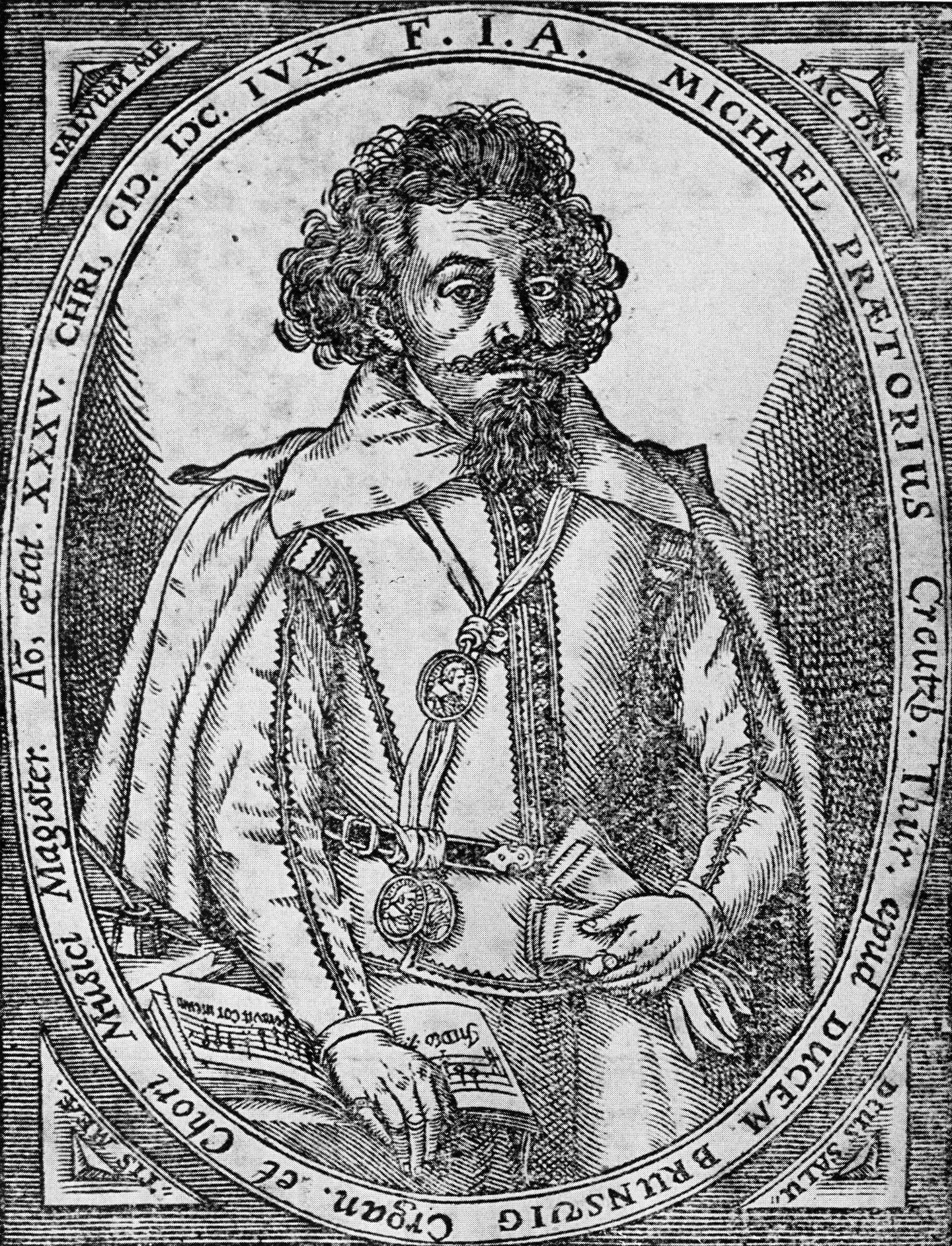
Composers in the 17th century enjoyed writing for this “noble” instrument, and for many the Baroque is a golden age of trumpet music. One composer who loved composing for trumpets was the extremely prolific German composer Michael Praetorius (15 February 1571–15 February 1621), whose birth AND death anniversary falls today. So how perfect it is to celebrate his wonderful music!
Praetorius’s works include the Musae Sioniae (1605–10), a collection of more than one thousand chorale and song arrangements; many works for the Lutheran church; Terpsichore (1612), a compendium of more than 300 instrumental dances; and Polyhymnia Caduceatrix et Panegyrica (1619), “containing 40 concertos of solemn peace and joy,” written in a polychoral style reminiscent of Giovanni Gabrieli.
I am going to let Praetorius tell us some of what was in his mind as he composed the works in Polyhymnia Caduceatrix et Panegyrica (this comes from his Syntagma Musicum III, Chapter VIII): “It should be noted here that trumpet players have a habit of rushing [the beat], because of the large amount of breath required by the trumpet and the difficulty of sustaining it at a slow tempo. So when the trumpets enter, the beat should be increased in order that they do not end their Sonaten too soon; when they drop out, the former beat may be resumed until they reenter. . . . There must be at least two trumpet players present who understand music and can read the notes as I have composed them . . .”
My classical music post for today is Michael Praetorius’s In dulci jubilo (Polyhymnia panegyrica et caduceatrix no. 34).


Leave a Reply