

Gerald Finzi: Introit
In many countries, August is a month to get away, take time off, prepare for the coming school year, or just relax. I am taking a break from writing new posts this August; instead, I will share some of my favourite music and posts from previous years of the DCMP.
First posted 31 August 2013
“In the night of death, hope sees a star, and listening love can hear the rustle of a wing.”—Robert Green Ingersoll
The English composer Gerald Finzi famously was never satisfied with his own work; he constantly revised pretty much everything he composed, and many pieces ended up being abandoned. This was the case with his Concerto for Violin and Small Orchestra, completed in 1927. Although Finzi got a lot of advice and help from his two main mentors and friends, Ralph Vaughan Williams and Gustav Holst, he was not happy at all with the first movement, so that got thrown out before the first performance of the second and third movements of the Concerto, which took place in May 1927. Holst felt that those movements, and even more particularly the second movement, were “the best things I know of yours.” After the first performance, however, Finzi decided that the third movement was just not good enough, and so that, too, was discarded.
This second movement was subsequently published on its own as Introit for Violin and Small Orchestra, Op. 6. Steve Schwartz has described all of Finzi’s music: “Finzi’s characteristic tone is that of lyric ecstasy. The melodies just take off, and even in his purely instrumental pieces, the human voice seems to lie just around the corner.” This is a perfect description of Introit.
Rob Barnett said, “The earnest sweetness of Introit for solo violin and small orchestra is touching, elegiac, fragile and plaintive—a most beautiful piece.” Introit reminds me of Vaughan Williams’s The Lark Ascending, which was composed earlier in the 1920s. But where Lark is descriptive of a lazy afternoon, perhaps, and has a gentle sweetness throughout, Introit is—to me—far more profound. Finzi was an agnostic, but there is no doubt that his music is spiritual, contemplative, and reflective.
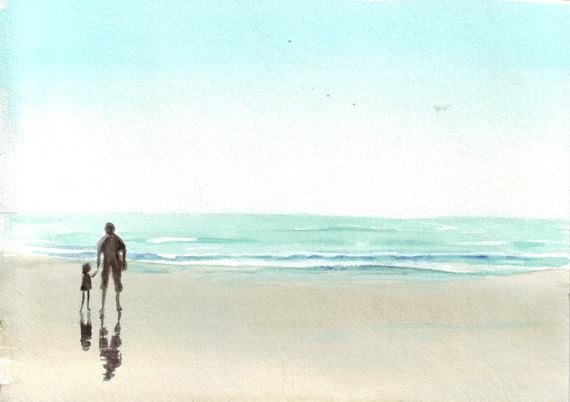
My posts for this past month have been in honour of my father, who died on 31 July. All of the works were composed, published, or performed in 1927, the year of his birth. I have discovered some music that I never knew before, and I am so glad to have found Introit. When I first heard it on 2 August, I felt a connection with my father, one that I know will never be broken.
My classical music post for today is Introit for Violin and Small Orchestra by Gerald Finzi.
I know that no matter what
You will always be with me.
When life separates us
I'll know it is only your soul
Saying goodbye to your body
But your spirit will be with me always.
. . .
No matter where I am
Your spirit will be beside me
For I know that no matter what
You will always be with me.

—Tram-Tiara T. Von Reichenbach


Leave a Reply