

Marvin David Levy: Masada
“That music always round me, unceasing, beginning, yet long untaught I did not hear, / But now the chorus I hear and am elated.”—Walt Whitman
Many composers get their inspiration from nature. There are so many beautiful places around the world. This June, the Daily Classical Music Post will travel around the world to national parks and reserves to discover the inspiration for some wonderful pieces of music!
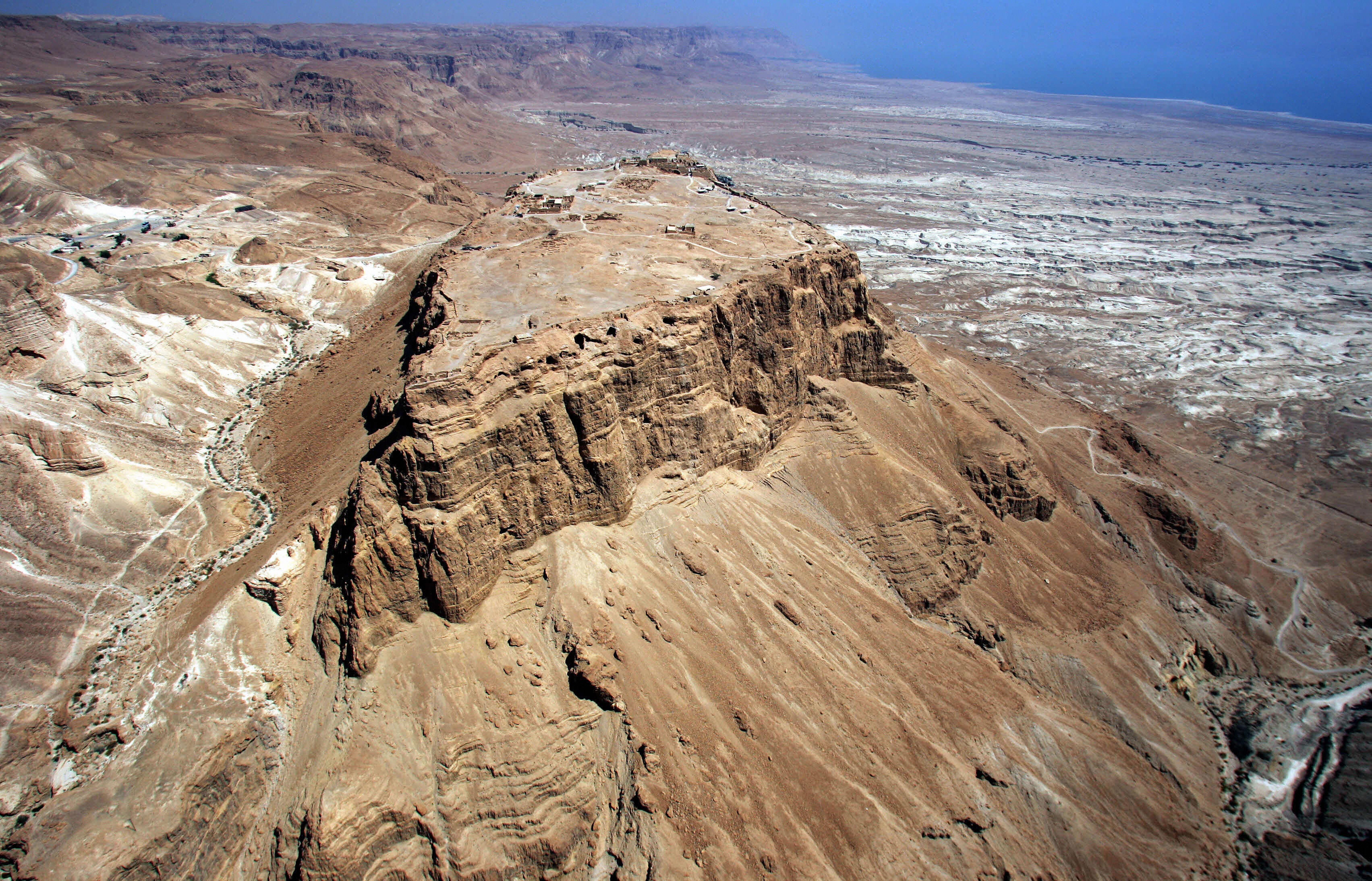
The 1st-century BCE king of Judea Herod the Great built a fortress on a plateau along the east border of the Judean Desert. This was where he planned to rule over his kingdom. Some scholars believe that this was the site of a mass suicide of almost 1,000 Jewish Zealots towards the end of the First Jewish–Roman War in 73 CE, although there is not a lot of evidence for this other than some archaeological remains and an account by the Roman–Jewish historian Flavius Josephus.
Masada was declared a national park by the Israel Nature and Parks Authority in 1966, and UNESCO made the area a World Heritage Site in 2001. There are hiking trails and a cable car that takes visitors to the top of the mountain. There are many well-preserved architectural ruins, including a synagogue from Herod’s time, a Byzantine church, Roman bathhouses, and a palace.
The American composer Marvin David Levy (1932–2015) composed the cantata Masada for tenor, chorus, and orchestra in 1973. The text, in both Hebrew and English, is taken from Josephus, the Bible, and Isaac Lamdan’s poem about Masada. Levy said of this work, “Here we remember an uncommon moment when the vanquished may be counted among history’s ultimate survivors, rendering the epic of Masada a shining metaphor for us all.”
The premiere in Washington received mixed reviews; Raymond Ericson said, “In this work he has adopted a currently fashionable vocabulary: a montage of sound effects, with a heavy reliance on percussion and the percussive use of other instruments and with the kind of free noodling by the performers that goes under the ‘aleatory’ label. . . . Sequences of tonal effects rarely settled into a pattern that would establish a mood. The quiet episodes dragged on without either the tension or momentum to sustain interest.” I have to say that I disagree; a mood is definitely set right from the start, and the isolation and starkness of the landscape is apparent throughout the work.
My classical music post for today is Marvin David Levy’s Masada.


Leave a Reply