

Shalati Joseph Khosa: “Tintshava ta Drakensberg”
“That music always round me, unceasing, beginning, yet long untaught I did not hear, / But now the chorus I hear and am elated.”—Walt Whitman
Many composers get their inspiration from nature. There are so many beautiful places around the world. This June, the Daily Classical Music Post will travel around the world to national parks and reserves to discover the inspiration for some wonderful pieces of music!
Tintshava ta Drakensberg by SJ Khosa – University of Limpopo Choristers KZN Philharmonic Orchestra
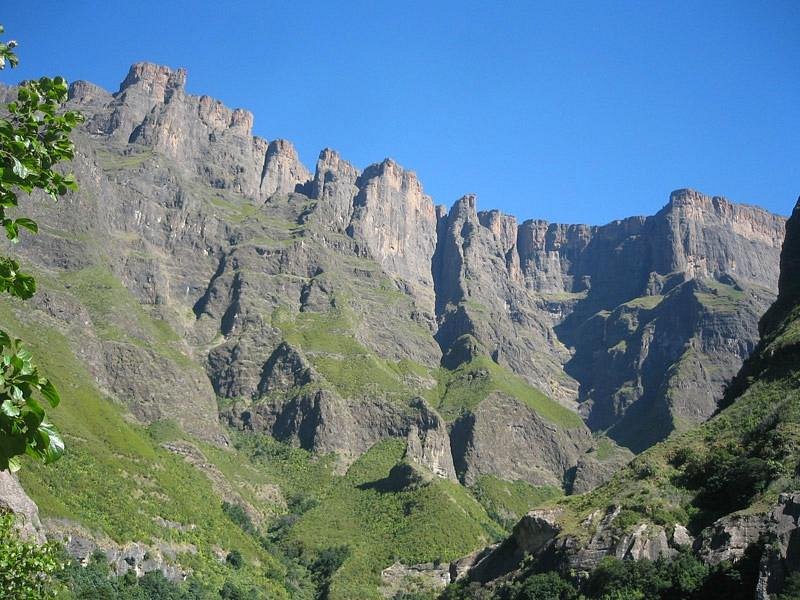
The transnational Maloti-Drakensberg Park World Heritage Site spans the border between the Kingdom of Lesotho and the Republic of South Africa. Included in this area is Sehlabathebe National Park (Lesotho) and uKhahlamba Drakensberg Park (South Africa). Among the treasures of this site are the incredible landscape, a wealth of species both protected and endangered, and rock paintings made by the San people beginning over 4,000 years ago.
Towering over this site is the Drakensberg, part of the Great Escarpment. The name Drakensberg (Dragons’ Mountains) was given to the mountains by the early Dutch colonists. The highest section of the Great Escarpment is known in Zulu as uKhahlamba (Barrier of Spears).
The South African composer Shalati Joseph (SJ) Khosa (1936–2013) studied in Switzerland and at the University of Pretoria. Khosa is one of the most important South African choral composers. He composed over 800 songs in his lifetime. Nature, in particular landscape, was a major theme in many of his works.
“Tintshava ta Drakensberg,” composed in 1979, “appreciates the breathtaking beauty of the Drakensberg, one of South Africa’s mountain ranges, so magnificent that beholding it purifies the soul” according to the liner notes of Africa Tivule, an album compiled to echo “the evocative challenge for Africa to identify and define itself.” The choral piece is in five sections. Section 1 describes the mountains. Section 2 describes the rivers cutting through the mountains. Section 3 is about the boulders and rocks that make up the mountains. Section 4 details places of interest, including tunnels, canyons, trails, and so on. In Section 5, Khosa celebrates the emotional effects of viewing the mountains: refreshing and purifying the soul.
My classical music post for today is Shalati Joseph Khosa’s “Tintshava ta Drakensberg.”


Leave a Reply