

Throughout human history, technological developments have transformed the ways we live, work, communicate, and create. This November, the Daily Classical Music Post will explore compositions inspired by or made possible through many of these innovations and inventions, discovering how the changing world has shaped the music we make and hear.
altar de piedra for percussion quartet and orchestra by Gabriela Ortiz
The Mexican composer Gabriela Ortiz (born 1964) grew up in a family in which music was an important part of everyday life. Her parents were founding members of Los Folkloristas, the influential ensemble devoted to researching and performing traditional music from Mexico and elsewhere in Latin America. Ortiz was surrounded by these musical traditions, but her formal studies eventually took her to Europe, where she completed a doctorate in composition at City University in London. The combination of these different musical worlds has been an important influence on her work.
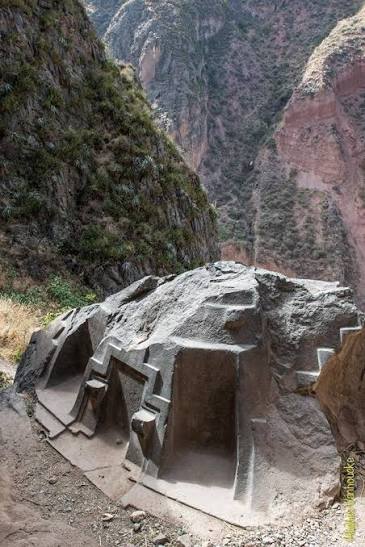
Altar de piedra (Stone Altar) was commissioned by the Los Angeles Philharmonic and composed in 2001–2002. It received its world premiere in January 2003, performed by the Swedish percussion ensemble Kroumata and the Los Angeles Philharmonic under Esa-Pekka Salonen. The work is part of Ortiz’s series of compositions inspired by the idea of an altar, not necessarily a religious object but as something symbolic or spiritual.
The title comes from Los pasos perdidos (The Lost Steps), a 1953 novel by the Cuban writer Alejo Carpentier. Its protagonist travels into the South American rainforest in search of musical instruments and encounters enormous rock formations resembling altars carved from stone. Ortiz was particularly interested in the contrasts within the story: the protagonist’s European cultural background and his encounter with the musical traditions and landscapes of South America, mirroring her own experiences.
Altar de piedra is a concerto-like work for percussionists and orchestra, in three movements: I. Un ángel maraquero (A maraca-playing angel); II. Ritmo genésico (Generative rhythm); and III. Torrente (Torrent). The percussion instruments take centre stage, including Peruvian cajones, marimbas, vibraphone, drums, and numerous other instruments. The first movement is driven by intricate rhythms, while the second gives greater prominence to the pitched percussion instruments. The third returns to an energetic interplay between percussion and orchestra. Ortiz herself has described the work as one of the most rhythmically complex she has written.
My classical music post for today is Gabriela Ortiz: Altar de piedra.


Leave a Reply