

For millennia, the rhythms of planting and harvest have shaped human life, marking seasons of labour, renewal, abundance, and gratitude. This October, the Daily Classical Music Post will journey across eras and continents, celebrating harvest in the Northern Hemisphere and planting in the Southern through music inspired by the Earth and its changing seasons.
Ernte-Tanze, Op. 45: Ernte-Tanze (Waltz) , Op. 45
Johann Strauss II (1825–1899) was born in Vienna into what would become one of Europe’s most famous musical families. His father, Johann Strauss I, was already a celebrated composer and orchestra leader and strongly opposed his son’s plans for a musical career. The younger Strauss persisted, eventually eclipsing his father’s fame and becoming internationally renowned for waltzes including The Blue Danube, Tales from the Vienna Woods, and Emperor Waltz, as well as the operetta Die Fledermaus.
Ernte-Tänze (Harvest Dances), Op. 45 is an early waltz by Johann Strauss II, written in 1847 when the future “Waltz King” was just 21 years old. Ernte-Tänze was written for the Brigitta-Kirchtag, a popular festival held in the Brigittenau district of Vienna. Strauss and his orchestra had been engaged to provide dance music, and he first performed the new waltz there on 26 July 1847.
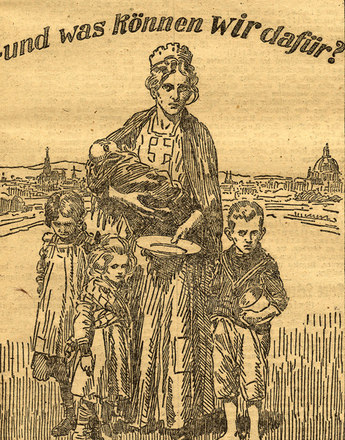
The title of this piece was particularly significant that summer. The harvest had not been good in the previous year, and this led to food shortages and demonstrations by hungry workers and others in Vienna. By July 1847, however, the authorities were reporting an abundant, high-quality grain crop. The prospect of a good harvest meant the possibility of relief from starvation, and so Strauss’s Harvest Dances had a significance well beyond the attractive pastoral title.
Musically, Ernte-Tänze gives us the young Strauss rather than the fully developed “Waltz King” of The Blue Danube. After a short introduction, the music unfolds as a chain of contrasting waltz sections, each built from two-part melodies, before giving way to the next. The melodies are relatively compact and direct, without the long, sweeping lines and elaborate orchestral introductions that would characterize Strauss’s mature music. The influence of Joseph Lanner, one of the great figures in the development of the Viennese waltz—and still enormously popular following his death in 1843—is particularly noticeable.
The waltz did not remain in the repertoire for long, and the orchestral version came close to disappearing altogether. Although a piano edition survived, the only known source for the orchestral version was a barely legible engraver’s copy prepared for the publisher. It eventually was painstakingly restored for the modern recording of Strauss’s complete orchestral works, rescuing this almost forgotten early waltz from obscurity.
My classical music post for today is Johann Strauss II: Ernte-Tänze, Op. 45.


Leave a Reply