

For millennia, the rhythms of planting and harvest have shaped human life, marking seasons of labour, renewal, abundance, and gratitude. This October, the Daily Classical Music Post will journey across eras and continents, celebrating harvest in the Northern Hemisphere and planting in the Southern through music inspired by the Earth and its changing seasons.
Joseph Hanson Kwabena Nketia (1921–2019) was born in Mampong, Ghana, and became one of the most important African music scholars of the 20th century. He was both a composer and an ethnomusicologist, devoting much of his career to studying, documenting, and teaching the musical traditions of Africa, particularly those of Ghana. His years of extensive field research in the 1950s and 1960s were an especially productive period for him as a composer. His works range from choral and vocal music to chamber works and pieces for piano.
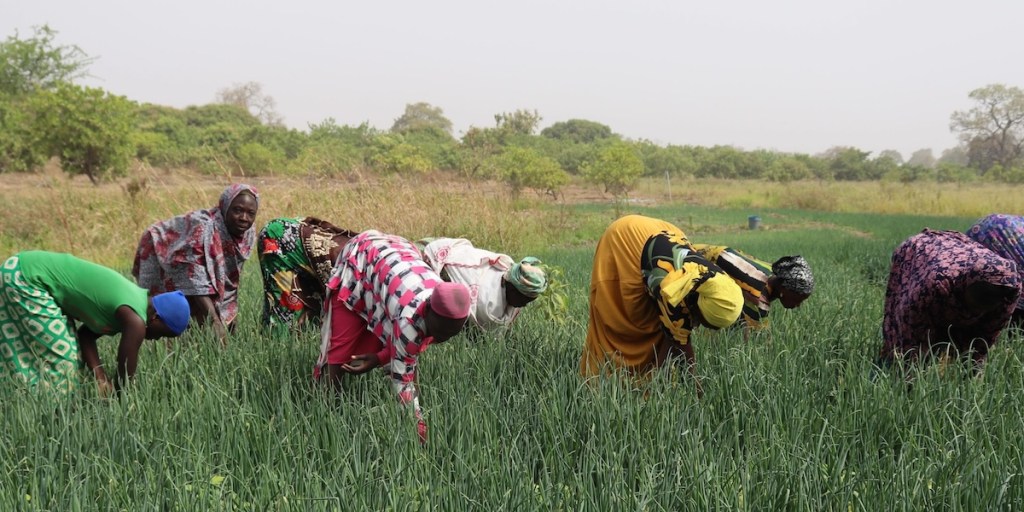
The Builsa are a people of northern Ghana, principally associated with what is now the country’s Upper East Region. Nketia’s Builsa Work Song (composed circa 1968), a tiny piece only just slightly more than a minute long for solo piano, is based on a traditional work song from their musical culture. Importantly, Nketia himself described the piece as a “recreation” rather than simply an arrangement or transcription. He takes the idea and musical material of an indigenous work song and reimagines it for the Western European piano, allowing the instrument to suggest something of the repetition, rhythmic momentum, and communal character of music associated with physical work.
The piece begins with a short emphatic gesture before settling into an insistent rhythmic pattern. The musicologist Kofi Agawu described this basic idea as a lively iambic rhythm—essentially a short-long pattern—combined with the same rhythm reversed. Through repetition, the simple figures generate an almost irresistible sense of forward motion. The main melody appears three times, framed by the exclamatory music heard at the beginning. The result is music that seems constantly propelled by its own pulse: one rhythmic action leads naturally to the next, just as repeated movements can establish a rhythm during collective physical labour.
This relationship between music and work has particular importance in agricultural societies around the world. Work songs can help people performing repetitive tasks establish and maintain a shared rhythm, but they can also transform exhausting communal labor into a social activity. Nketia reminds us that before anyone can celebrate the harvest, somebody has to do the work.
My classical music post for today is Joseph Hanson Kwabena Nketia: Builsa Work Song.


Leave a Reply