

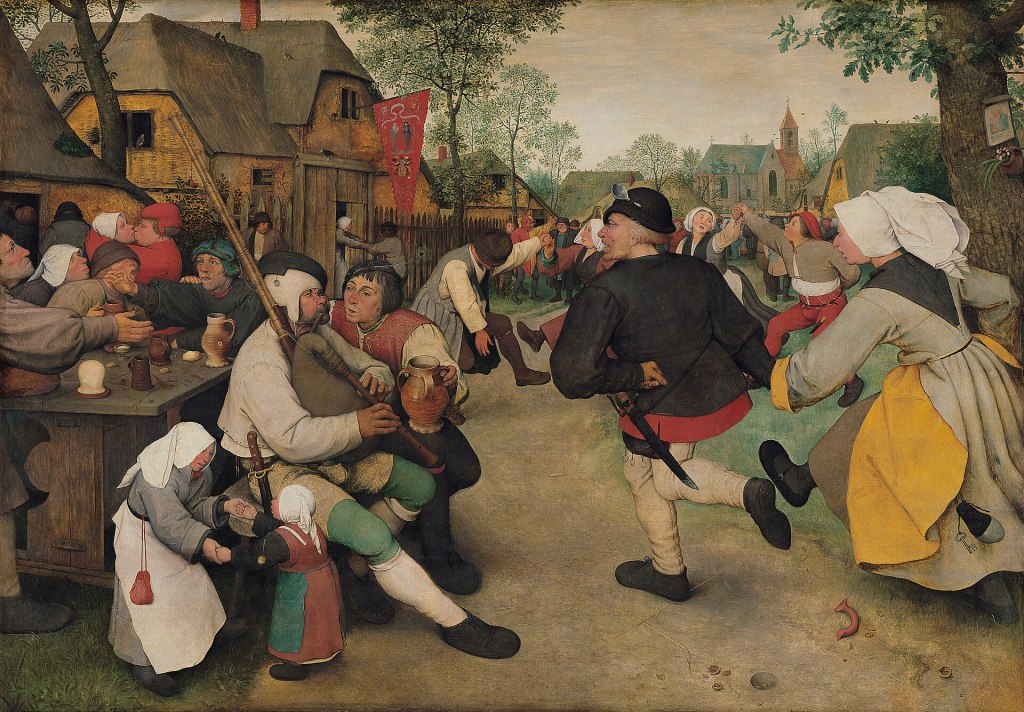
For millennia, the rhythms of planting and harvest have shaped human life, marking seasons of labour, renewal, abundance, and gratitude. This October, the Daily Classical Music Post will journey across eras and continents, celebrating harvest in the Northern Hemisphere and planting in the Southern through music inspired by the Earth and its changing seasons.
Autumn (L’Automno) Op.8 No.3 Major: Allegro
Antonio Vivaldi (1678–1741) was born in Venice and became one of the most prolific and influential composers of the Baroque period. A virtuoso violinist as well as a composer and Catholic priest—his red hair earned him the nickname Il Prete Rosso, “the Red Priest”—he spent much of his career associated with the Ospedale della Pietà, a Venetian institution for abandoned and orphaned girls well known for the extraordinary quality of its musical training and performances. Vivaldi wrote hundreds of concertos as well as operas and sacred music, and his approach to the concerto had an enormous influence on later composers, including Johann Sebastian Bach.
Le quattro stagioni (The Four Seasons) consists of four violin concertos—La primavera, L’estate, L’autunno, L’inverno—published in Amsterdam in 1725. They were probably composed several years before their publication. Each concerto is associated with a sonnet describing exactly what is happening in the music, and the printed score contains letters and descriptive phrases linking particular musical passages to particular lines of the poems. The author of the sonnets is not identified, although traditionally they have been thought to be Vivaldi’s own work.
The first stanza of the sonnet for L’autunno (Autumn), the third concerto, sets the scene: “Celebra il Vilanel con balli e Canti / Del felice raccolto il bel piacere / E del liquor di Bacco accesi tanti / Finiscono col Sonno il lor godere.” The orchestra begins with a vigorous, rhythmic rustic dance, and the solo violin joins in the festivities. But before long, the wine begins to have an effect. Vivaldi labels this section of the score “L’Ubriaco”—“the drunkard”: the solo violin becomes increasingly unpredictable, with rapid runs, abrupt changes of direction, and stumbling phrases suggesting someone who has had rather too much to drink. The dance music repeats around these drunken episodes, as though the party is continuing while individual revelers become progressively less steady on their feet. Eventually the music slows, and Vivaldi marks this passage “L’Ubriaco che dorme”—“the drunkard asleep.” The opening dance then returns once more to bring the movement to an exuberant close.
Vivaldi doesn’t merely make the “drunkard” music sound disorderly: he sets the solo violin against the continuing stability of the orchestra, so we can almost hear the difference between the party carrying on normally and one particular participant becoming increasingly incapable of keeping himself together. It’s a wonderful image.
My classical music post for today is Antonio Vivaldi: Le quattro stagioni: L’autunno: I. Allegro.


Leave a Reply