

For millennia, the rhythms of planting and harvest have shaped human life, marking seasons of labour, renewal, abundance, and gratitude. This October, the Daily Classical Music Post will journey across eras and continents, celebrating harvest in the Northern Hemisphere and planting in the Southern through music inspired by the Earth and its changing seasons.
Kunihiko Hashimoto (1904–1949) belonged to the first generation of Japanese composers to build careers within the Western classical tradition while searching for ways to create music that was recognizably Japanese. Born in Tokyo and raised partly in Osaka, he studied violin at the Tokyo Music School and initially taught himself composition. He became known not only as a composer but also as a violinist, conductor, and teacher, eventually becoming a professor at the Tokyo Music School. During the 1930s he studied in Europe, including with Egon Wellesz in Vienna, and encountered some of the leading figures of European modernism. His musical world was unusually broad: alongside concert music he wrote songs, popular and commercial music, and music drawing upon Japanese folk traditions.
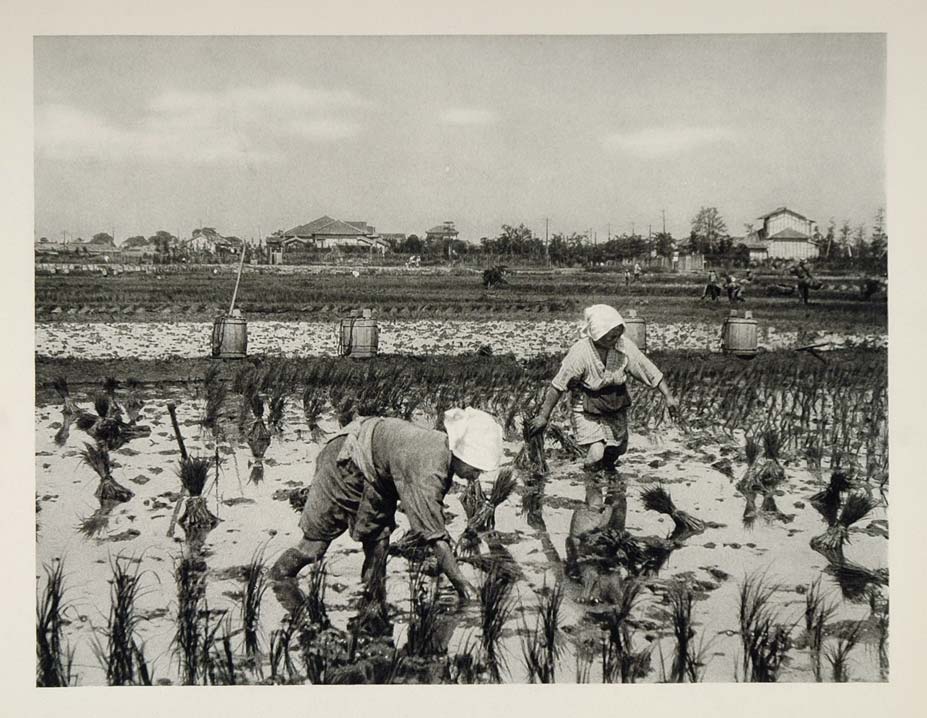
“Taue-uta” is a lively song for voice and piano composed in 1930 to words by the Japanese poet Ryūha Hayashi. The title is totally self-explanatory: taue means the planting or transplanting of rice, and uta means song, so this is quite literally a song about planting rice. Rice-planting songs have a long history in Japan, where planting the paddies traditionally was communal work. Songs helped coordinate repetitive physical labor, but rice cultivation also carried ceremonial and religious associations connected with hopes for a successful crop. Hashimoto’s song isn’t simply a transcription of one particular traditional folk song; instead, he and Hayashi evoke the sounds and atmosphere of communal rice-planting within a modern art song for singer and piano.
Planting rice doesn’t normally mean scattering seed directly into the field. Rice seedlings are first raised in nursery beds and then transplanted into prepared flooded paddies. Taue refers specifically to this transplanting stage: workers move through the paddy setting the young plants into the mud, usually in orderly rows. The harvest may still be months away, but the success of that harvest begins with these small plants and the people doing the backbreaking work of putting the plants into the earth.
And this is very much a working song. There are rhythmic cries and calls associated with the work, including an especially vivid moment when bundles of rice seedlings are tossed to the people standing in the paddy ready to plant them. The opening of the song is reminiscent of Japanese folk music and emphasizes the humour and energy with which Hashimoto creates the impression of a group working together.
My classical music post for today is Kunihiko Hashimoto: “Taue-uta.”


Leave a Reply