

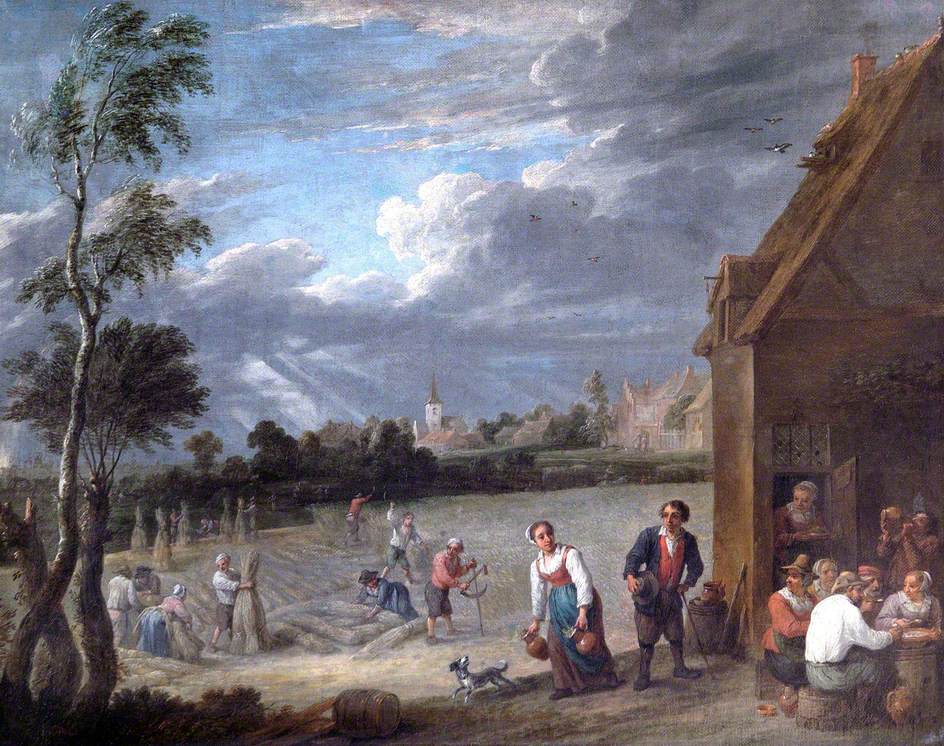
For millennia, the rhythms of planting and harvest have shaped human life, marking seasons of labour, renewal, abundance, and gratitude. This October, the Daily Classical Music Post will journey across eras and continents, celebrating harvest in the Northern Hemisphere and planting in the Southern through music inspired by the Earth and its changing seasons.
King Arthur, Z. 628, Act V, The Final masque: Song Tune. “Your Hay”
Henry Purcell (1659–1695) is generally regarded as one of the greatest English composers of the Baroque period. He spent much of his career in royal service, holding positions at Westminster Abbey and the Chapel Royal, while composing church music, songs, instrumental works, and a remarkable amount of music for the London stage. His life was short—he died at the age of 36—but during the final years of his career he produced some of his most enduring theatrical works, including King Arthur, The Fairy Queen, and The Indian Queen.
King Arthur, or The British Worthy, a five-act theatrical work with a text by John Dryden, was first performed at the Dorset Garden Theatre in London in 1691. It is usually described today as a semi-opera, a particularly English form in which spoken drama alternated with elaborate musical episodes containing songs, choruses, dances, and instrumental music. The principal characters are spoken roles rather than singing ones. The singers generally appear as gods, spirits, shepherds, and other subsidiary or allegorical characters. The music therefore doesn’t simply carry the plot in the way it does in an Italian opera; instead, spectacular musical scenes are inserted into the spoken drama.
“Your hay it is mow’d and your corn is reap’d” appears in the final masque of Act V. It is essentially a great celebration of Britain and its prosperity. Aeolus calms the winds; Pan and a Nereid sing of Britain’s island abundance; and then Comus, the classical god associated with feasting and revelry, appears with a group of peasants. They have very good reason to celebrate: the hay has been mown, the corn has been reaped, the barns are full, and there is plenty to eat and drink. The song becomes a cheerful invitation to enjoy the rewards of the year’s agricultural labour.
Earlier this month we met Hob, who abandoned his plough because he was too busy thinking about love. Here, thankfully, somebody (or, more likely, several somebodies) has stayed on the job. The hay is mown, the crop has been reaped, the barns are full, and the harvest is safely gathered in. A small side-note: in 17th-century English, “corn” did not specifically mean maize; it meant grain or cereal crops generally, especially the principal grain of a particular region, so Dryden’s “your corn is reap’d” is essentially telling us that the grain harvest is in.
My classical music post for today is Henry Purcell: King Arthur: “Your hay it is mow’d and your corn is reap’d.”


Leave a Reply