

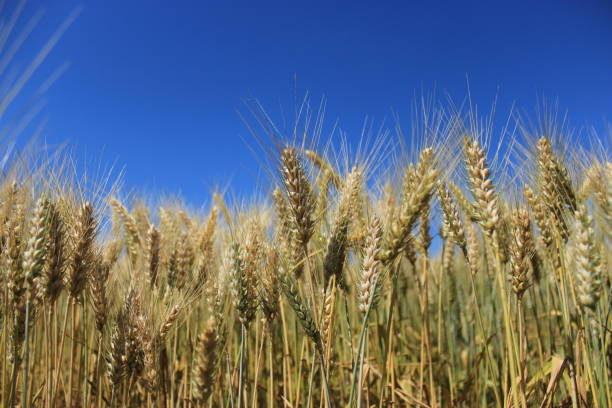
For millennia, the rhythms of planting and harvest have shaped human life, marking seasons of labour, renewal, abundance, and gratitude. This October, the Daily Classical Music Post will journey across eras and continents, celebrating harvest in the Northern Hemisphere and planting in the Southern through music inspired by the Earth and its changing seasons.
Estancia, Op. 8: II. Wheat Dance
Alberto Ginastera (1916–1983) was one of Argentina’s most important composers and a major figure in 20th-century Latin American classical music. Born in Buenos Aires, he drew extensively on the landscapes, dances, and musical traditions of Argentina, particularly during the earlier part of his career. He later moved toward increasingly modernist techniques, but his ballet Estancia, Op. 8 (1941) belongs to the period in which Argentine rural life was central to his musical imagination. Argentine folk rhythms and the figure of the gaucho—the horseman and cattle worker of the Pampas—play particularly important roles in the ballet.
Estancia was commissioned by American impresario Lincoln Kirstein for his touring company, American Ballet Caravan. The company disbanded before it could stage the work, however, so Ginastera extracted four movements to create the orchestral suite Four Dances from Estancia, Op. 8a, which was first performed at the Teatro Colón in Buenos Aires in 1943. The complete ballet finally reached the stage there on 19 August 1952, performed by the Teatro Colón’s ballet and orchestra, with choreography by Michel Borovsky and Juan Emilio Martini conducting.
The ballet was conceived as a portrait of Argentine country life over the course of a single day. Its story concerns a young man from the city who falls in love with a country girl and must prove himself among the gauchos through his skills as a horseman and dancer. Ginastera also incorporated verses from José Hernández’s great 19th-century gaucho poem Martín Fierro. But in addition to the human story, there is also the story of the immense landscape of the Pampas. Ginastera wrote about the changing impressions he experienced there, from exhilaration to profound tranquility as the countryside transformed during the course of a day.
“Danza del trigo” (Wheat Dance), the second movement of the suite, is one of the more lyrical episodes in Estancia, but there is a strong sense of movement running through it. A broad, expressive melody rises over a persistent rhythmic accompaniment, creating music that is both expansive and restless. The title invites us to imagine the wheat itself becoming the dance—not merely swaying gently in the breeze, but a whole field in constant motion, rippling and surging beneath the open sky. After all the preparation—seed, planting, rain, ploughing, and human labour—at last the crop is growing in the field. The harvest will come later; today, the wheat dances.
My classical music post for today is Alberto Ginastera: Estancia, Op. 8a: II. “Danza del trigo.”


Leave a Reply