

Throughout history, myths and legends have brought ancient mysteries and epic sagas to life. This September, the Daily Classical Music Post will explore how composers from different eras and continents have reimagined these stories through the universal language of music.
Medea, Act III: “E che? Io son Medea!” (Medea, Chorus, Giasone, Neris) (Live)
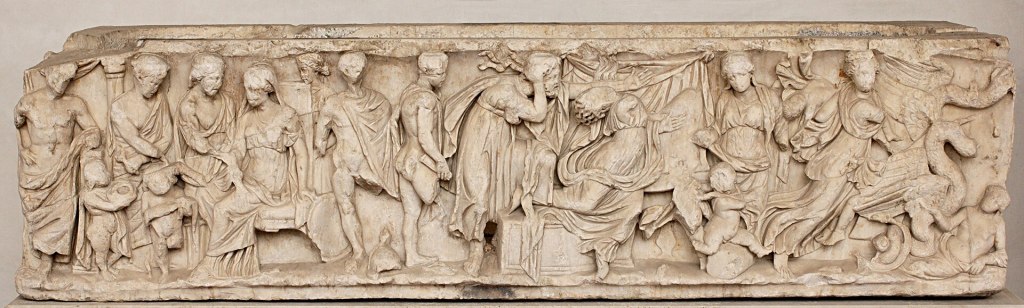
The ancient Greek myth of Medea and Jason was first mentioned in Hesiod’s epic poem Theogony, written around 700 BCE. In that story, Medea, daughter of King Aeëtes of Colchis and granddaughter of the sun god Helio, was referenced in passing and her marriage to the Greek hero Jason was only briefly noted. By 630 BCE, Medea had gained a reputation for being a powerful sorceress, but it wasn’t until the Greek playwright Euripides penned his tragedy Medea in 431, detailing her betrayal, exile, and revenge, that she became the tragic figure we know today. For those who did not study the play in school, here’s a brief synopsis: Jason abandons Medea and their two sons to marry a new royal bride, Princess Glauce of Corinth. Glauce’s father King Creon banishes Medea from Corinth, fearing what she might do, but then relents and allows her to stay for one day to settle her affairs. That was a big mistake: Medea poisons clothing that kills both Glauce and Creon; she murders her sons and then flees in a chariot sent by Helios, leaving Jason alone to regret his decisions and mourn the loss of his children.
This story about the danger of broken oaths, the oppression of women, and passion over reason (to name just a few themes) was immensely popular in 18th-century Europe, in theatre, opera, visual art, and literature. Medea was seen as a fiercely independent character who defied the standards usually set for women. So it was no surprise that one of the top opera composers of the day chose Medea as the subject for what turned out to be an extremely influential work.
The Italian composer Luigi Cherubini (1760–1842) was one of the most highly respected composers of his day; Ludwig van Beethoven considered him to be the greatest living composer at that time. After being presented to the French court in 1785, Cherubini decided to spend the rest of his life in France, where most of his operatic masterpieces were composed. One of these operas, Médée (1797), was based on Euripides’ play as well as Pierre Corneille’s 1685 play Médée. The libretto was written by François-Benoît Hoffman. The opera was not a success at its premiere. The original French libretto was translated into German in 1800, leading to a few performances, and then into Italian in 1865, which led to much more successful stagings in the 19th century. But it wasn’t until 1953, when Maria Callas resurrected the opera in Italian, that it was celebrated and performed to great acclaim throughout the world.
The role of Medea, onstage and singing pretty much the entire time, is notoriously difficult, so the opera is rarely performed today. The final Act III scenes, beginning with the aria “E che? Io son Medea!,” are overwhelming to listen to; I can’t imagine the extraordinary vocal and dramatic intensity required to get through it all.
My classical music post for today is Luigi Cherubini: Medea: “E che? Io son Medea!”


Leave a Reply