

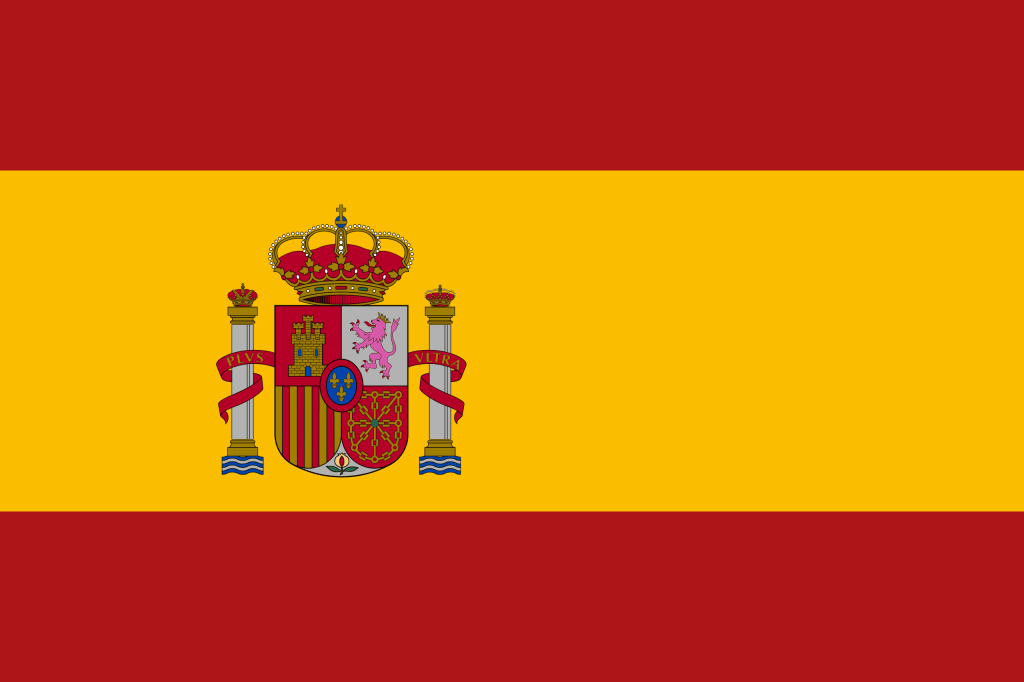
“If you were a country, what would your national anthem be?”—David Levithan
One of my favourite things about the 2026 FIFA Men’s World Cup was hearing some national anthems that I had never heard before as well as some that I rarely hear. And I wondered: How did each country choose its national anthem? Was it newly composed or taken from something already in existence? This August, the Daily Classical Music Post will explore the anthems of 31 of the 32 teams that made it to the knockout stage.
Spain National Anthem (Instrumental)
We continue our exploration of the anthems of the countries represented in the 2026 FIFA Men’s World Cup knockout stage (minus the United States of America), in alphabetical order, with Spain.
“La Marcha Real” is one of only four national anthems without official lyrics. It is also one of the oldest national anthems in the world, as it dates from around 1760, with Manuel de Espinosa de los Monteros (ca. 1730–1810) listed as the composer. One of the most popular legends surrounding the origin of the anthem says that the tune was in fact a personal gift from King Frederick the Great of Prussia to King Charles III of Spain. Whatever its provenance, Charles III declared “La Marcha Real” to be the official march of Spain in 1770. There was an attempt around 1870 to replace “La Marcha Real” but, in the end, nothing changed, and “La Marcha Real” remained in place.
Although over the years there have been lyrics added, none of them stuck, and for the most part people seem to agree that the anthem is better without words. During Franco’s dictatorship, the poet José María Pemán wrote some particularly fascist lyrics (unsurprisingly), praising the “Fatherland” and talking of raising arms; of course, these lyrics were dropped immediately after Franco died. And pretty much any time (other than in the Franco era) that a politician or committee has tried to write official words, it has triggered an immediate political controversy and debate, forcing the government to leave the song entirely instrumental.
There is something very familiar about the opening bars of “La Marcha Real”; it’s not that I know this anthem well, although of course Spain has been in many international competitions over the years so I’ve heard it a LOT. I am pretty sure that someone borrowed this tune for some other work. For a military-type march, this anthem is fairly gentle, and the tune flows nicely. It’s really too bad that there aren’t any words, as it seems very singable, unlike some other anthems we could mention (and have mentioned this month, definitely).
My (somewhat) classical music post for today is Manuel de Espinosa de los Monteros: “La Marcha Real.”


Leave a Reply