

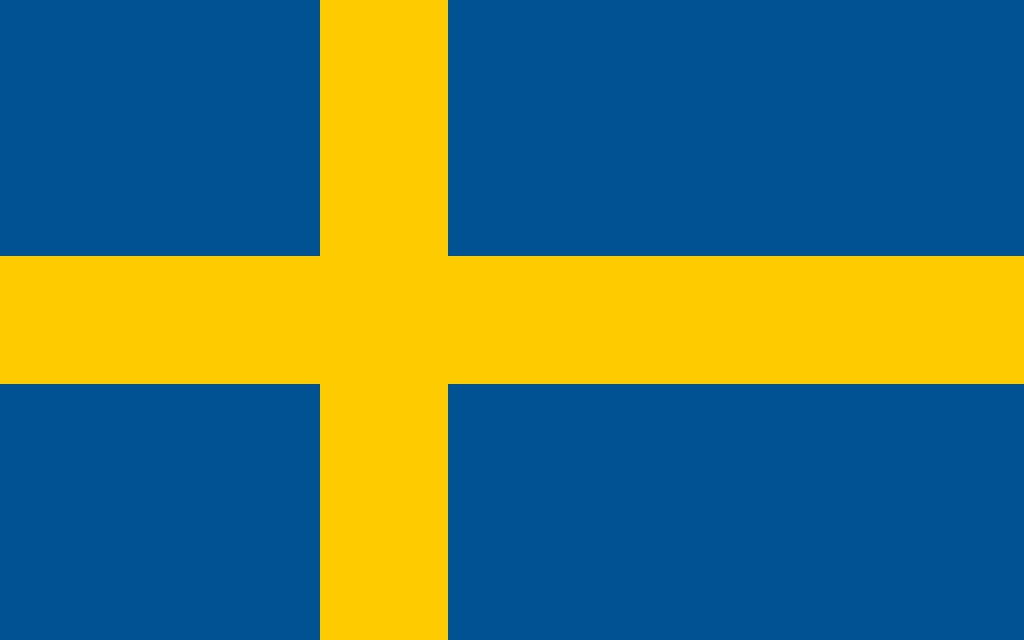
“If you were a country, what would your national anthem be?”—David Levithan
One of my favourite things about the 2026 FIFA Men’s World Cup was hearing some national anthems that I had never heard before as well as some that I rarely hear. And I wondered: How did each country choose its national anthem? Was it newly composed or taken from something already in existence? This August, the Daily Classical Music Post will explore the anthems of 31 of the 32 teams that made it to the knockout stage.
Swedish National Anthem – “Du Gamla, Du Fria” (SV/EN)
We continue our exploration of the anthems of the countries represented in the 2026 FIFA Men’s World Cup knockout stage (minus the United States of America), in alphabetical order, with Sweden.
Sweden never formally adopted “Du gamla, du fria” as the national anthem, although there have been multiple attempts in the Riksdag to do so. The discussion usually ends with politicians saying that the Swedish people know and love “Du gamla, du fria,” so there really isn’t any point in making it official. And that seems to work, for now, anyway.
The tune of “Du gamla, du fria” is a traditional Västmanland folk tune, called “Kämpavisán,” by (once again) the prolific Unknown. In 1844, the Swedish folklorist Richard Dybeck wrote two patriotic verses to fit the rhythm of “Kämpavisán.” Although Dybeck was Swedish, his verses never mention Sverige (Sweden), instead focusing on the entire Nordic region of Sweden, Norway, and Denmark. In 1910, the Swedish writer Louise Ahlén added two more verses, which specifically mentioned Sweden, but they were not adopted by the public, and those verses are rarely, if ever, sung at sporting events or official state ceremonies; if anyone were to sing them in public today, it would be seen as a major social blunder.
There also is a story that ties the anthem very neatly to football: In 2014, “Du gamla, du fria” was the focus of a massive global pop-culture moment, thanks to Sweden’s football superstar Zlatan Ibrahimović. Ibrahimović recorded a spoken-word version of the anthem; in the last line, instead of saying, “I want to live and die in the North,” he said, “I want to live and die in Sweden.” Ibrahimović said that he did this because the old words didn’t represent modern, multicultural Sweden.
Like some of the other countries we’ve discussed this month, Sweden has a separate anthem for the royal family, “Kungssången.” This was written by the Swedish composer Otto Lindblad in 1844 to a poem by Carl Vilhelm August Strandberg, and although it was sometimes performed at state events as well as royal ones for most of the 19th century, in 1893 it was officially designated as the royal anthem and so was only performed at royal events from that time on.
My (somewhat) classical music post for today is Unknown: “Du gamla, du fria.”


Leave a Reply