

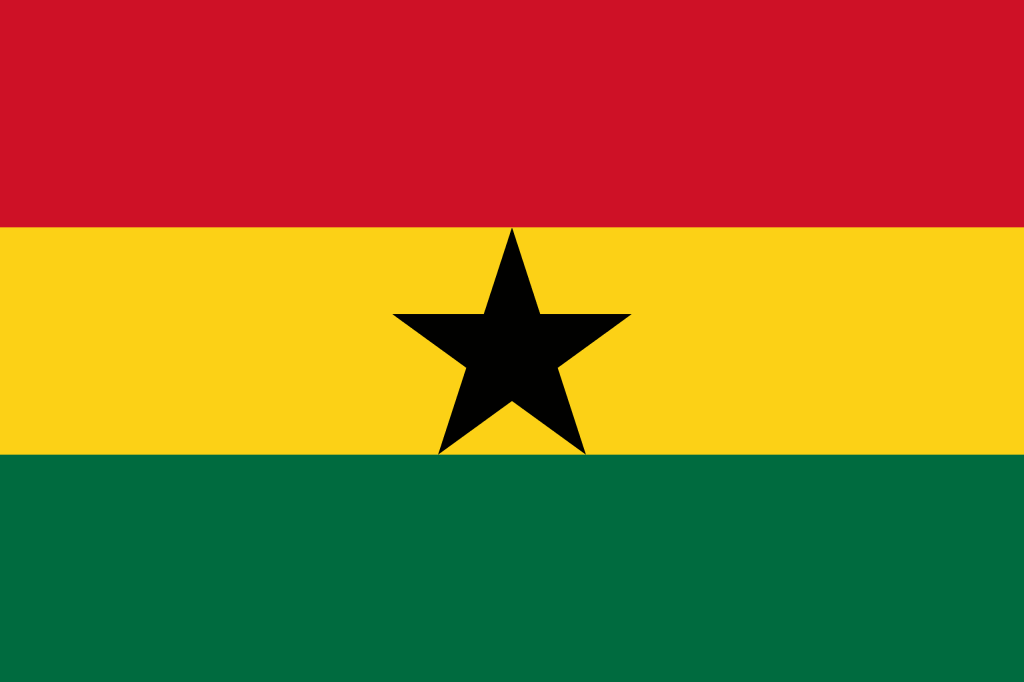
“If you were a country, what would your national anthem be?”—David Levithan
One of my favourite things about the 2026 FIFA Men’s World Cup was hearing some national anthems that I had never heard before as well as some that I rarely hear. And I wondered: How did each country choose its national anthem? Was it newly composed or taken from something already in existence? This August, the Daily Classical Music Post will explore the anthems of 31 of the 32 teams that made it to the knockout stage.
GHANA NATIONAL ANTHEM (ALL 3 STANZAS) -Composed by Phillip Gbeho
We continue our exploration of the anthems of the countries represented in the 2026 FIFA Men’s World Cup knockout stage (minus the United States of America), in alphabetical order, with Ghana.
“God Bless Our Homeland Ghana” was written in 1958 by the Ghanaian composer Philip Gbeho (1904–1976), known as the father of Ghanian art music. Gbeho helped to establish the Arts Council of Ghana and was Director of Music of the Ghanaian National Symphony Orchestra. In addition to “God Bless Our Homeland Ghana,” there is an unofficial national anthem in the indigenous Twi language, composed by the ethnomusicologist Ephraim Amu in 1929, “Yɛn Ara Asaase Ni.” Although “Yɛn Ara Asaase Ni” isn’t recognized or sung at any formal events, it is sung in schools throughout Ghana.
When Ghana was preparing for independence from Britain in 1957, Prime Minister Kwame Nkrumah decided to hold a massive national contest to replace “God Save the Queen.” Hundreds of people entered the contest, and after much deliberation, they narrowed down the list to just four songs. The government played all four of these final songs on national radio, asking the public to vote on their favourite one. The overwhelming winner was “God Bless Our Homeland Ghana” by Gbeho. However, the committee felt that the text, by Emmanuel Pappoe-Thompson, was too focused on religion and not enough on revolutionary African excellence, so they had it rewritten by a literary group immediately. In 1966, when Nkrumah was overthrown, because the text was selected by his administration, it was scrapped. The new government kept Gbeho’s popular and well-loved melody but held a competition for new lyrics in the 1970s, which was won by Michael Kwame Gbordzoe. Gbordzoe, by then studying in Germany, didn’t know for several years that his text had been chosen. It took until 2007 for him to be officially recognized for his authorship.
This anthem is quite emotional, even with the driving beat and general dynamic of fortissimo. The vocal range is not so wide as to make it hard for people to sing. I can see why people say singing this anthem fills them with pride.
My (somewhat) classical music post for today is Philip Gbeho: “God Bless Our Homeland Ghana.”


Leave a Reply