

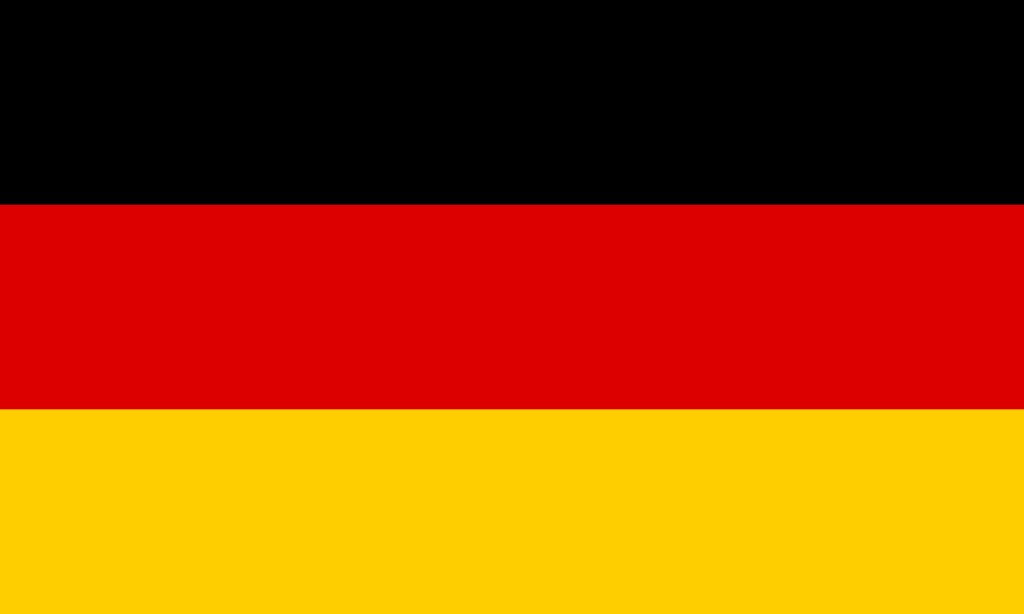
“If you were a country, what would your national anthem be?”—David Levithan
One of my favourite things about the 2026 FIFA Men’s World Cup was hearing some national anthems that I had never heard before as well as some that I rarely hear. And I wondered: How did each country choose its national anthem? Was it newly composed or taken from something already in existence? This August, the Daily Classical Music Post will explore the anthems of 31 of the 32 teams that made it to the knockout stage.
National Anthem: Germany – Deutschlandlied [NEW VERSION]
We continue our exploration of the anthems of the countries represented in the 2026 FIFA Men’s World Cup knockout stage (minus the United States of America), in alphabetical order, with Germany.
The “Deutschlandlied” is also known as the “Austria tune.” It was written by the Austrian composer Joseph Haydn (1732–1809) in 1797 as a personal anthem to the Kaiser, called “Gott erhalte Franz den Kaiser.” Haydn was inspired by the English anthem “God Save the King,” which he heard when he was in London in the 1790s. He wanted to raise morale in Austria and give people a song as inspiring as “La Marseillaise” to rally around. The majestic feeling of the “Deutschlandlied” is a testament to Haydn’s great skill as a composer.
The original words by the Austrian Lorenz Leopold Haschka were replaced by lyrics written by the German poet August Heinrich Hoffmann von Fallersleben in 1841. The Austria tune was sung in Austria but not really in Germany (which anyway wasn’t an actual country until 1848) until the late 19th century. It was more widely sung and recognized as sort of a national anthem after 1914.
The first verse (beginning “Deutschland, Deutschland über alles,” which actually was a plea by Fallersleben calling for the unification of Germany) was sung from the late 19th century until the end of World War II. After the war ended in 1945, neither East nor West Germany had an official national anthem. In 1990, just before German reunification, the decision was taken to adopt the “Deutschlandlied”—but only the third verse, focusing entirely on “Einigkeit und Recht und Freiheit”—as the national anthem of the unified Germany, and this was made official in 1991.
Although strictly speaking it isn’t illegal to sing the first two verses, it is very definitely majorly frowned-upon, and anyone who does sing it is very likely making a strong political statement. Or a mistake: in 2017 in Hawaii at a Fed Cup (now Billy Jean King Cup) tennis match, Will Kimball, an American singer, accidentally sang the first verse. The German team was immediately shocked and distressed; the players stood arm-in-arm on the sidelines and began loudly singing the correct third verse, trying to drown out the microphone. This was a major diplomatic situation, leading to an apology to Germany from the United States Tennis Association.
My (somewhat) classical music post for today is Joseph Haydn: “Deutschlandlied.”


Leave a Reply