

“If you were a country, what would your national anthem be?”—David Levithan
One of my favourite things about the 2026 FIFA Men’s World Cup was hearing some national anthems that I had never heard before as well as some that I rarely hear. And I wondered: How did each country choose its national anthem? Was it newly composed or taken from something already in existence? This August, the Daily Classical Music Post will explore the anthems of 31 of the 32 teams that made it to the knockout stage.
God Save the King – National Anthem • United Kingdom (1801–)
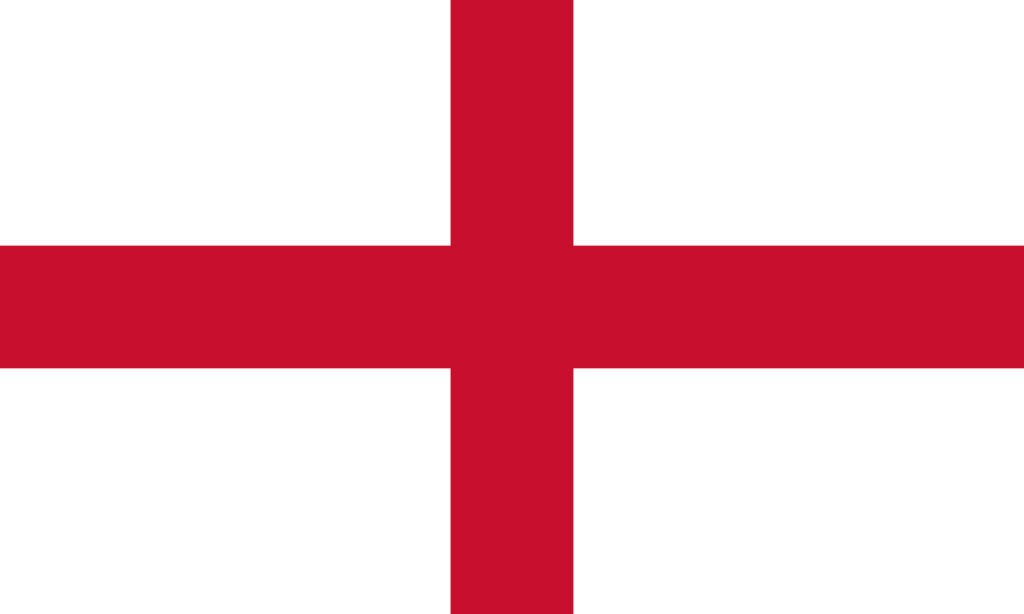
We continue our exploration of the anthems of the countries represented in the 2026 FIFA Men’s World Cup knockout stage (minus the United States of America), in alphabetical order, with England.
“God Save the King” first appeared in the mid-1740s in a version very close to the present one. Scholars are divided (aren’t they always?) on the origins of the tune, but some trace it back to early plainsong, some see the beginnings in works by Henry Purcell, and some believe that the carol “Remember O Thou Man” was the basis for it. John Bull gets the most votes, although he could have just regularized a tune that was already there. There is even a story that the French love to tell, something about how Jean-Baptiste Lully composed “Dieu sauve le Roi” in 1686 to celebrate Louis XIV surviving anal fistula surgery; George Frideric Handel visited France, heard the catchy “butt surgery celebration song,” and stole it. Highly unlikely, but very amusing. I’m going with “Unknown,” a close relative of “Anonymous,” and nearly as prolific.
“God Save the King” became a viral hit in September 1745 after the English composer Thomas Arne arranged the song as a public show of support for King George II when the Jacobites were marching south from Scotland. There was a verse that referred to crushing “rebellious Scots,” but that was quickly banned. The “official” lyrics were published in a magazine in late 1745 and they are pretty close to the ones sung today. I’m not sure that anyone knows who wrote them. The 17th-century English music historian Charles Burney claimed that the lyrics were originally written in Latin for King James II, but I can’t find any confirmation of that. Burney wrote a setting to be played at Covent Garden, so I guess he probably knew something about it.
Although it is a hymn tune, it wasn’t really considered to be suitable for singing in church in the 18th century. It was sung at concerts and at royal events, but it was sung more often in countries other than England, including Germany, Russia, Sweden, and Liechtenstein, and it may have been Joseph Haydn’s inspiration for the hymn that became the German national anthem. “God Save the King”—well, actually, “God Save the Queen”—was finally referred to as the national anthem on the accession of Queen Victoria in 1837. There usually isn’t much of an introduction, just a drum roll or similar, and then everyone just launches into the lyrics.
My (somewhat) classical music post for today is Unknown: “God Save the King.”


Leave a Reply