

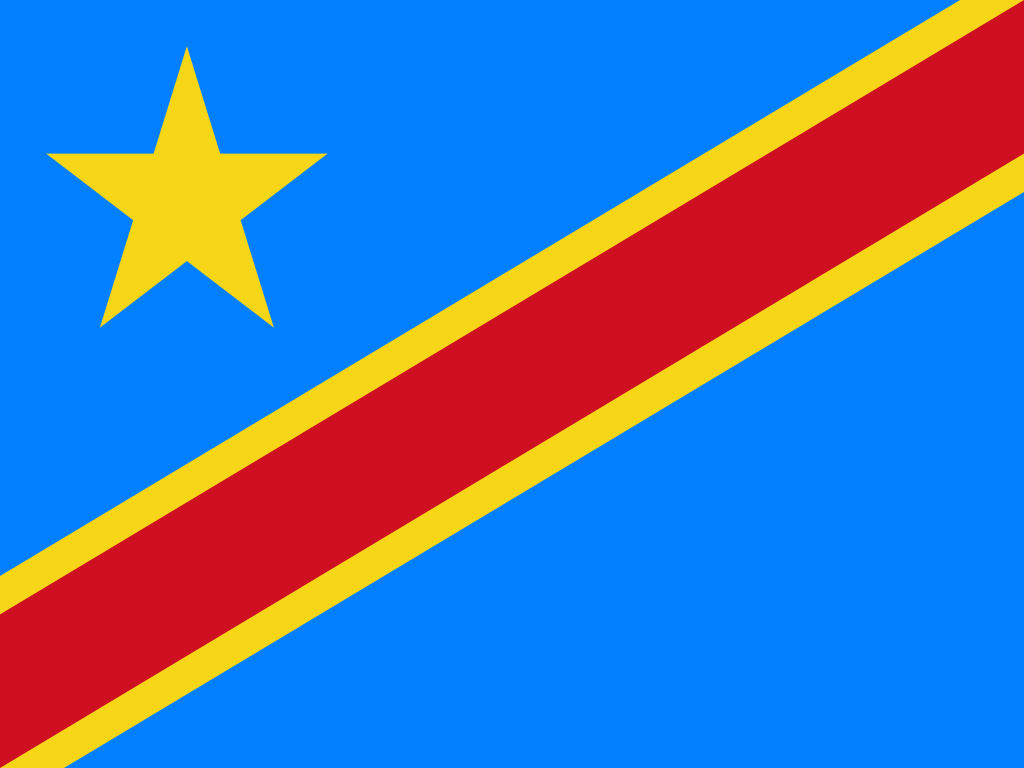
“If you were a country, what would your national anthem be?”—David Levithan
One of my favourite things about the 2026 FIFA Men’s World Cup was hearing some national anthems that I had never heard before as well as some that I rarely hear. And I wondered: How did each country choose its national anthem? Was it newly composed or taken from something already in existence? This August, the Daily Classical Music Post will explore the anthems of 31 of the 32 teams that made it to the knockout stage.
National Anthem of DR Congo – Debout Congolais
We continue our exploration of the anthems of the countries represented in the 2026 FIFA Men’s World Cup knockout stage (minus the United States of America), in alphabetical order, with the Democratic Republic of the Congo.
“Debout Congolais” was the national anthem of the Democratic Republic of the Congo from the time of independence from Belgium in 1960 to 1971, and then again from 1997 to the present day. In between, “La Zaïroise,” by the same composer, the Jesuit priest Simon-Pierre Boka di Mpasi Londi (1929–2006), with lyrics by the same writer, Joseph Lutumba, was the national anthem. The reason for the change in 1971 was that Mobutu Sese Seko banned “Debout Congolais” when he seized power. In 1997, Laurent-Désiré Kabila overthrew Mobutu and declared that “Debout Congolais” would be restored.
“Debout Congolais” was written very quickly. Boka was studying in Rome in May 1960 when Congolese leaders realized that they didn’t have a national anthem ready for the June independence celebrations. Boka was suddenly ordered to return to the Congo, and Lutumba worked with him to get the song written within days. They barely got it finished before 30 June, Independence Day, and apparently the musicians had to rehearse around the clock to get it ready for the first performance. Boka and Lutumba had to write “La Zaïroise” really quickly as well, and unsurprisingly there are a lot of musical similarities between the two anthems.
One of the most interesting things about the original music for “Debout Congolais” is that it has call-and-response sections, combining Central African musical practice with a Western choral format. This anthem is one of the only national anthems that was specifically composed for alternating soloist and choral parts. It has a stately and uplifting feeling throughout, reflecting pride in the hard-won freedom from Belgian colonial oppression. The opening is like a solemn processional, but the syncopations make this march less military-like and more celebratory.
Although “Debout Congolais” was banned for 26 years, when Pope John Paul II visited Kinshasa in 1980, choirs welcoming the pope subtly integrated motifs from the banned anthem. Mobutu reportedly was furious, but there was nothing he could do.
My (somewhat) classical music post for today is Simon-Pierre Boka di Mpasi Londi: “Debout Congolais.”


Leave a Reply