

Classical music composition often runs in the family. This July, the Daily Classical Music Post will celebrate some of the well-known and not-so-well-known members of these composing families.
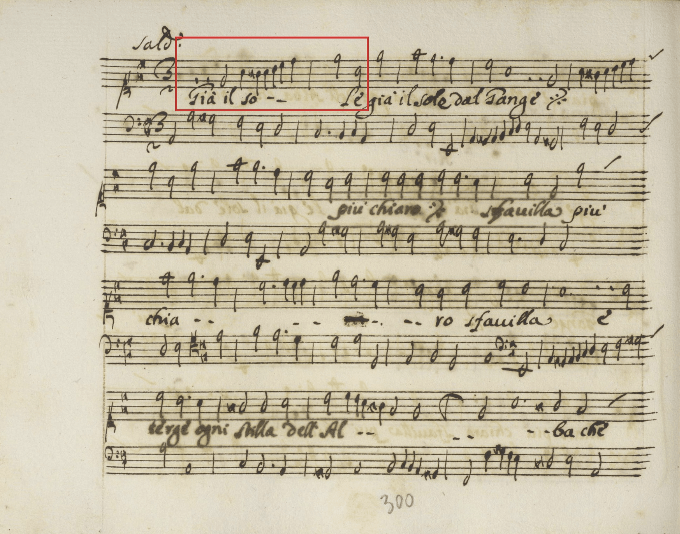
A. Scarlatti: Gia il sole dal gange
The Italian Baroque composer Alessandro Scarlatti (1660–1725) was known especially for his operas and cantatas. He was the most important composer of the Neapolitan School of opera, as he brought the dramatic tradition of Italian opera that began in the 17th century with Claudio Monteverdi to its highest point, developing the da capo aria and inventing the Italian three-movement overture (the precursor of the symphony) as well as the four part sonata (the precursor of the modern string quartet). He also was a key figure in the use of the technique of motivic development. And he was the father of two composers, Pietro Filippo and Domenico. There was also a Giuseppe Scarlatti, but no one is sure how (or if) he was related to Alessandro.
Alessandro had a wide-reaching influence; his theatrical music was the model for George Frideric Handel’s Italian works. Alessandro composed in almost every genre of the time, including sacred works such as motets and masses as well as secular works such as sonatas and concerti grossi.
Alessandro composed his first opera, Gli equivoci nel sembiante (Mistaken Identities), when he was only 19 years old in 1679. He followed this successful opera quickly with L’honestà negli amori (Honesty in Love Affairs) less than one year later, in 1680. The libretto was written under a pseudonym, Felice Parnasso.
The Act II aria “Già il sole dal Gange” is celebrated for its upbeat and sunny melody. It is often used to train young singers in vocal agility. The three-act opera is set in Algiers, and it follows the standard Baroque opera themes of romantic intrigue, jealousy, and love. Saldino, a pageboy, sings “Già il sole dal Gange” while he enjoys a beautiful sunrise and morning. The reference to the Ganges River in the text was a common Baroque figure of speech that basically meant “the East” or “where the sun rises.” There are beautiful florid vocal runs in the two-strophe aria, with each verse acting as a miniature ABA form.
Hermione Lai wrote, “The music pulses with a buoyant optimism, with the first rays of sunlight dancing across a serene river. This radiant dawn aria, with its soaring, sunlit phrases and graceful melismas, captures youthful love’s awakening. It is still a staple in vocal pedagogy today for its pure and flowing melodic line. ”
My classical music post for today is Alessandro Scarlatti: L’honestà negli amori: “Già il sole dal Gange.”


Leave a Reply