

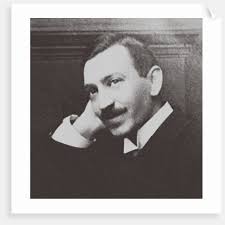
Classical music composition often runs in the family. This July, the Daily Classical Music Post will celebrate some of the well-known and not-so-well-known members of these composing families.
Nikolai Tcherepnin (1873-1945) : Svat (The Matchmaker), Overture to the ballad opera Op. 57 (1929)
The Tcherepnin family was a prominent musical dynasty spanning four generations. The Russian late-Romantic composer Nikolai Tcherepnin (1873–1945) was celebrated for his orchestral works, operas, and ballets. He studied with Nikolai Rimsky-Korsakov and became a notable teacher at the St Petersburg Conservatory. Nikolai and his son Alexander both fled Russia during the Bolshevik Revolution. Alexander’s sons Serge and Ivan were significant contemporary classical composers. The dynasty continued with Ivan’s sons, the contemporary classical composers Sergei and Stefan.
Nikolai was a foundational figure in Russian musical modernism. He blended the brilliant orchestration of his Rimsky-Korsakov with French Impressionist colours. After he left Russia, he settled in Paris, where he was renowned as a conductor, educator, and composer. He composed his first opera in 1929, Svat (The Matchmaker), Op. 57.
Svat was based on Alexandr Ostrovsky’s 1853 Russian satirical stage comedy Poverty is No Crime (Bednost ne porok). This ballad opera, or comic folk-opera, shows Nikolai’s strong Russian nationalist music roots. He employed traditional Russian folk songs and his music matches Ostrovsky’s witty social commentary about commerce, love, and traditional matchmaking.
Svat has rarely been staged, and I couldn’t find a recording of the entire opera, or even more than just the overture. His biography on the Tcherepnin Society website says, “Tcherepnin’s best scores still suffer unjust neglect today. . . . [W]hen Tcherepnin encountered the impressionistic language of turn-of-the-century modernism he found the original and persuasive voice we hear in La Princesse Lointaine, Le Royaume Enchanté, Le Pavillon d’Armide and Narcisse. Among the later works, the lively overture to Swat makes one curious about the rest of the opera.”
In a review of a recording of music by Nikolai, Alexander, and Ivan, Gregor Tassie wrote, “[This recording] represents a quite astonishing musical family from Russia, and reflects on classical music over the last century from Romanticism to serialism and electronic music. Each of the Tcherepnin clan had an individual personality and a style epitomising the diverse trends of twentieth-century music. Of all three composers, Nikolai Tcherepnin is the most successful in writing beautifully late Romantic scores in the shadow of Rimski-Korsakov and [Anatoly] Lyadov. He could have been even more successful had he not had competition from [Sergei] Prokofiev and [Igor] Stravinsky in the first decades of his career. ”
My classical music post for today is Nikolai Tcherepnin: Svat, Op. 57: Overture.


Leave a Reply