

Classical music composition often runs in the family. This July, the Daily Classical Music Post will celebrate some of the well-known and not-so-well-known members of these composing families.
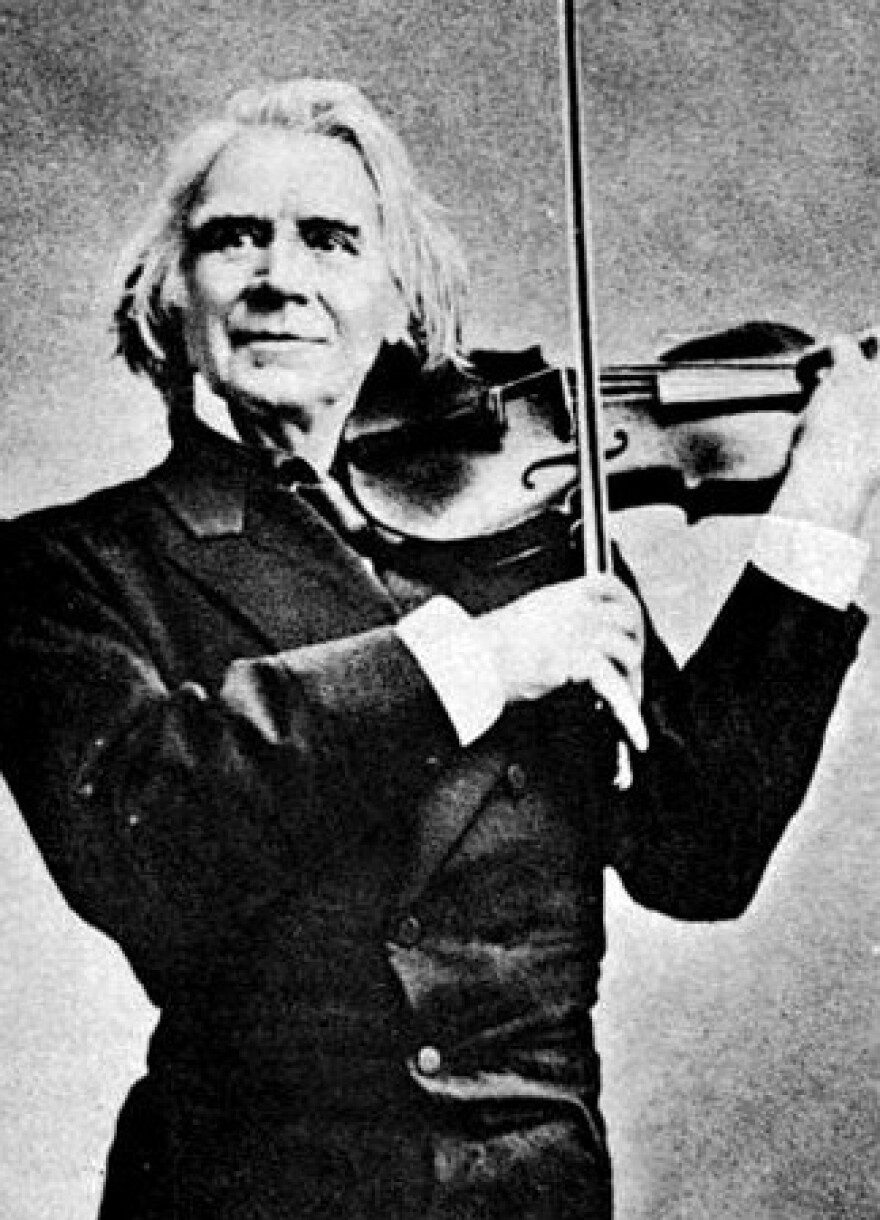
The Norwegian Romantic Nationalist composer Ole Bull (1810–1880) was a virtuoso violinist and composer. He wrote dozens of works for the violin, but most of the manuscripts were just sketches, not fully realized, and many were lost. He was friends with all of the important musicians of the day, and he also mentored the young Edvard Grieg, to whom he was distantly related (Ole’s brother was married to Grieg’s aunt). Grieg said, “Ole Bull became my savior. He showed me the beauty and originality in Norwegian folk music.” Ole’s father and uncles were musicians, and his grandnephew Sverre Hagerup Bull and and great-grandnephew Edvard Hagerup Bull were also composers.
Ole composed “Sætergjentens søndag” (The Dairymaid’s Sunday) in 1849. It was written as the centrepiece for his larger work, Et Sæterbesøg (A Visit to the Mountain Pasture); however, “Sætergjentens søndag” became so popular that Bull arranged it as a standalone work. Critics praised the piece for its distinctive “Nordic tone,” and historians have credited it with providing the impetus for an independent Norwegian classical music identity separate from German and Danish influences.
Ole first arranged the piece for violin and piano; other arrangements, by Ole as well as other Norwegian composers, include versions for choir, voice and piano, and orchestra. Johan Diederich Behrens added text by Jørgen Moe for the first choral version. Friedrich August Reissigers arranged this choral version for male choir and piano in 1851.
Ole was not just a brilliant violinist; he also was a showman. After hearing King Oscar II of Sweden and Norway boast about how he and Peter Christen Asbjørnsen had climbed to the top of the Great Pyramid of Giza, Ole wanted to climb the pyramid as well. But he also wanted to do more than that, so he bet the king that not only would he climb the pyramid (at the age of 66) but that he also would take his violin with him and perform at the top. When Ole reached the top, he played “Sætergjentens søndag” in the king’s honour. And he won the bet.
In 1852, Ole toured the United States of America and was so enamoured with the countryside that he decided to buy just over 11 thousand acres in Potter County, Pennsylvania, with a view to developing a Norwegian colony there that he planned to call “New Norway.” The land was not good enough for farming, however, and New Norway never got off the ground. It’s a state park now.
My classical music post for today is Ole Bull: “Sætergjentens søndag.”


Leave a Reply