

June is the sixth month in the Gregorian calendar, which is the calendar most in use throughout the world. This June, the Daily Classical Music Post will explore chamber music, choral music, and operatic sextets from the Renaissance to the 21st century.
Consort Set for 6 Viols No. 3 in F Major, VdGS 90-93: III. Fantazy
The English Jacobean composer William Lawes (1602–1645) was given the title “Father of Musick” after he was killed during the English Civil War fighting on the side of the Royalists. Mark Levy wrote, “Not one content to fiddle at home, since after all he was more used to performing for one of the greatest monarchs in Europe, he chose to fight and was duly knock’d on the head in one of the last and most disastrous royalist manoeuvres, shot in the massacre at Rowton Heath on 24 September 1645, as the King watched from his vantage point atop the old city wall of Chester.”
Lawes was admired for his innovative and experimental music, particularly his viol consort works. He was a bridge from the late Renaissance to the early Baroque; he veered away from the traditional counterpoint rules followed by English Renaissance composers and he also incorporated chromaticisms that were unusual for compositions of the early to mid-17th century. His virtuosic writing employs dissonances and intricate rhythms. He was a highly acclaimed lyra viol player and his knowledge and mastery of the viol shines through all of his music.
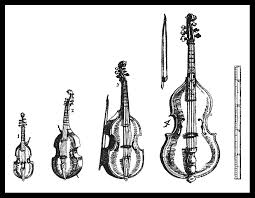
In the 1630s, Lawes composed a series of works for six-part viol consort (two treble viols, two tenor viols, and two bass viols). These ensemble dance works were most likely composed for two violins in place of the two treble viols, and Lawes also wrote a version for two violins, two bass viols, and two theorbos. The music was not literally meant for dancing, and the titles of the movements don’t always seem to fit; as Laurence Dreyfus pointed out, “Given the conflicts of titles in the sources, even he doesn’t always know exactly which dance he is composing for, so when in doubt, he just calls the dance an ‘aire’. Or is it an alman? a morriss (the English folk dance)? a paven? a paven with only two (instead of three) sections?”
Johan van Veen wrote, “These are basically suites, whose main sections are the fantazies, where we meet Lawes at his most unconventional. The strange and uncommon harmonies in some of these fantazies are quite astonishing. The second fantazy of the Consort Sett in F ends—after a sudden general pause—with a harmonic progression which can only be compared to the madrigals of Carlo Gesualdo.”
There are moments in the consort sets that are reminiscent of John Dowland, others of Jean-Philippe Rameau, and yet others of Johann Sebastian Bach. But in the end, this amazing music is pure Lawes, and it is glorious.
My classical music post for today is William Lawes: Consort Set for 6 Viols No. 3 in F Major, VdGS 90-93: III. Fantazy.


Leave a Reply