

Classical music collaborations range from joint compositions and artistic partnerships to modern crossover projects bridging genres. Some works, particularly in the 18th century, were intentionally created in sections for different composers to work on. This April on the Daily Classical Music Post, we’ll explore some of these partnerships and learn why collaboration is one of the cornerstones of classical music.
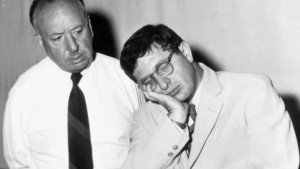
The American composer Bernard Herrmann (1911–1975) and the English filmmaker Alfred Hitchcock (1899–1980) formed one of cinema’s most influential partnerships, lasting from 1955 to 1966. Herrmann created iconic, suspenseful scores for Hitchcock’s films including Vertigo, Psycho, and North by Northwest. For 11 years, their collaboration was defined by mutual respect, shared humour, and a revolutionary approach to sound. However, this incredible collaborative relationship ended bitterly over musical differences on Hitchcock’s film Torn Curtain.
Neil Sinyard wrote, “In the credit sequence of Torn Curtain, made in 1966, some of you might have noticed that it says ‘Music by John Addison’. Actually the music you heard was by Bernard Herrmann, arguably the most notorious piece of film music ever written because it brought to an end—and an abrupt and hostile end—this great director/composer partnership. The orchestra liked it: indeed, after they’d played it, they burst into spontaneous applause, so it came as something of a surprise to them that, when Hitchcock heard it, he was angry and upset, cancelled the remainder of the session, and severed a partnership that had served him well—nay, brilliantly—over 11 years and 9 films.” The reason given by Hitchcock was that there wasn’t a “theme song” in the music, and he accused Herrmann of refusing to follow instructions. And that was the end of the partnership—and the friendship.
Before that point, however, together they created some incredible films and music. Most people agree that the pinnacle of their partnership came in 1958, with Herrmann’s score for Vertigo. Herrmann’s score—which he said was influenced by the music of Richard Wagner—mirrors the film’s themes of obsession, nostalgia, and circularity, creating a truly operatic and hypnotic atmosphere.
Craig Lysy wrote, “Bernard Herrmann was the natural choice of Hitchcock given their successful collaboration on The Trouble With Harry (1955) and The Man Who Knew Too Much (1956). Of the eight films on which these two titans collaborated, Vertigo stands as Hitchcock’s supreme film, one that marked the apogee of his collaboration with Herrmann. Herrmann responded with what your author believes is a score for the ages, one marked by romantic obsession, isolation and the liberation of death. His prelude, perhaps the most dramatic film opening ever offered, provides a stunning example of music powerfully setting the tone of a film.”
My classical music post for today is Bernard Herrmann: Vertigo: title sequence.


Leave a Reply