

“Give me your tired, your poor, / Your huddled masses yearning to breathe free.” This poem, which once epitomized the spirit of the United States of America, would appear to no longer be true, with immigrant visa processing for more than 75 countries shut down indefinitely by the current US government. This month, the Daily Classical Music Post will explore and celebrate the traditional and contemporary classical music of 31 of these countries.
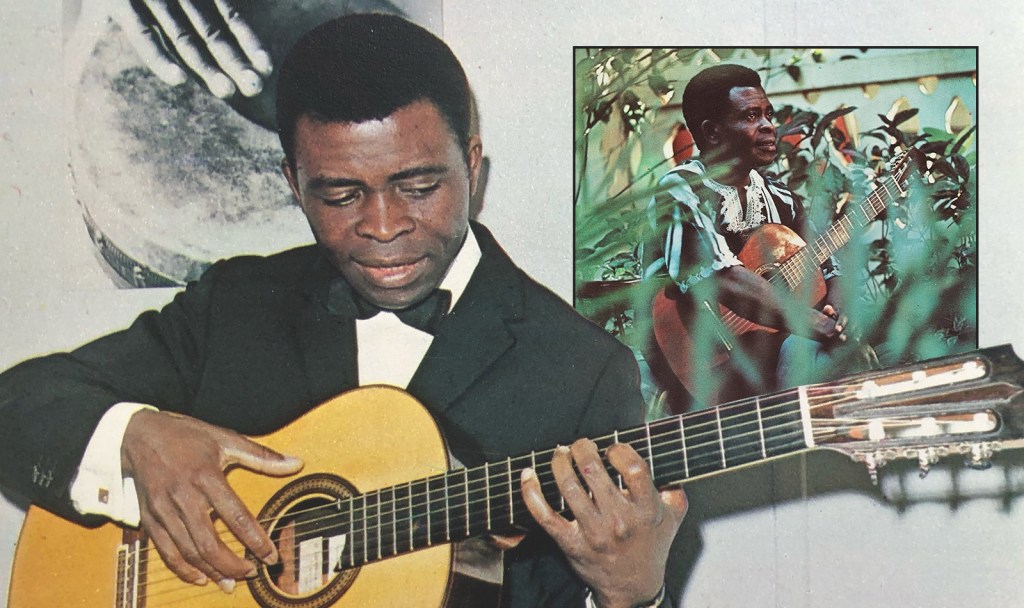
Francis Bebey – Pièces pour Guitare Seule (Full Album 1965)
Western classical music was introduced to Cameroon by Protestant missionaries in the mid-19th century. Adeline Tchouakak wrote, “Local inhabitants of Cameroon, being used to traditional singing and instruments such as tom-toms, drums, mvets (a string instrument from the Fang-Beti peoples), shakers and balafons to praise God, couldn’t take it. According to Ange Cécile Ndzengue, choirmaster of the Classical Choir of Yaoundé, which her father Mr. Elle Ntonga co-founded in 1969: ‘Our ancestors thought this music was too complicated, they preferred the simple chants they knew that didn’t require any particular training, as classical music does’.” However, over time, Gregorian chant, Bach, and Mozart became more popular, and some local musicians began incorporating traditional Cameroon songs into Western-style music.
The Cameroonian musician Francis Bebey (1929–2001) merged Cameroonian makossa rhythms (a dance form that emerged in the 19th century) with classical guitar, jazz, and pop. His music was described as being groundbreaking, intellectual, humorous, and profoundly sensual. Bebey’s father was a Protestant minister who introduced the Western classical canon to Bebey from a young age. In addition to learning how to play traditional Cameroonian instruments, Bebey quickly mastered the guitar, accordion, and banjo. He once said, “The artistic challenge is to use the tools of Western progress and communicate messages of the African heritage.” He also was a pioneer of electronic music in Cameroon. He was always learning, always innovating, always surprising.
Bebey’s 1965 album Pièces pour Guitare Seule is a wonderful example of the ways in which he was able to combine Western and Cameroonian musical styles seamlessly. The album contains just two original compositions: “Le Chant D’Ibadan” and “Black Tears.” Bebey’s playing is beautiful and virtuosic, and there is so much going on in every phrase that I listened to both pieces over and over just to see what else I could catch each time.
My classical music post for today is Francis Bebey: “Le Chant D’Ibadan” and “Black Tears.”


Leave a Reply