

Composers leave works unfinished for many different reasons including untimely death, loss of inspiration, perfectionism, and, in some cases, a feeling that the work is already complete despite being technically incomplete. This February, the Daily Classical Music Post will explore unfinished works and find out the ways in which they are performed today, either still incomplete or finished by other composers.
Bartók: Viola Concerto/Luosha Fang/The Slovak Radio Symphony Orchestra
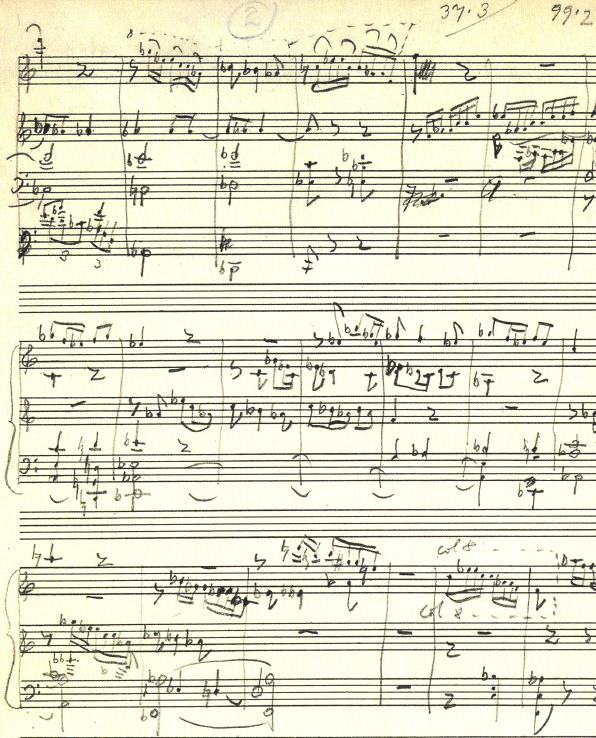
The Hungarian composer Béla Bartók (1881–1945) was suffering from leukemia in 1944 when the Scottish violist William Primrose asked him to compose a challenging work for the viola. Bartók began work on the viola concerto but left only sketches and fragments of the piece when he died less than a year later.
Primrose and Bartók corresponded by letter from late 1944; in a letter that Bartók wrote to Primrose in early September 1945, he claims that he is nearly done with the concerto, with only the orchestration to complete. He was dead by the end of September, and in fact the sketches were nowhere near ready for orchestration. In 1949, Bartók’s good friend, the composer Tibor Serly, completed the concerto, and Primrose gave the premiere in Minneapolis later that year. Since then, there have been several more revisions made, including one by Bartók’s son Peter.
In the first and third movements, Bartók included a snippet of music that sounds suspiciously like the Scottish tune “Gin a Body Meet a Body, Comin’ Thro’ the Rye,” probably a nod to Primrose’s Scottish heritage. Bartók wrote that the three-movement concerto would include “a serious Allegro, a Scherzo, a (rather short) slow movement, and a finale beginning Allegretto and developing the tempo to an Allegro molto.”
Kenneth Woods, “The Viola Concerto is a profoundly lyrical, spiritual and life affirming work. In those sad, final years Bartók found within himself a capacity for expressing warmth and joy that listeners continue to marvel at 50 years later. The first movement is the most complete and fully developed and shows Bartók at the height of his musical powers. The lyrical second movement is deeply spiritual in feeling, but the folk-music inspired fire of the finale is no less full of life. Sadly, the finale shows the most evidence of Serly’s hand—in spite of the richly promising musical material the movement is less completely developed that one would expect in a mature work of the master. Still a brilliant conclusion to the greatest work in the viola repertoire, its slightly weakened musical finish is a poignant reminder of the fate of its creator, who did not live to complete it or hear it performed.”
My classical music post for today is Béla Bartók: Viola Concerto.


Leave a Reply