

Composers leave works unfinished for many different reasons including untimely death, loss of inspiration, perfectionism, and, in some cases, a feeling that the work is already complete despite being technically incomplete. This February, the Daily Classical Music Post will explore unfinished works and find out the ways in which they are performed today, either still incomplete or finished by other composers.
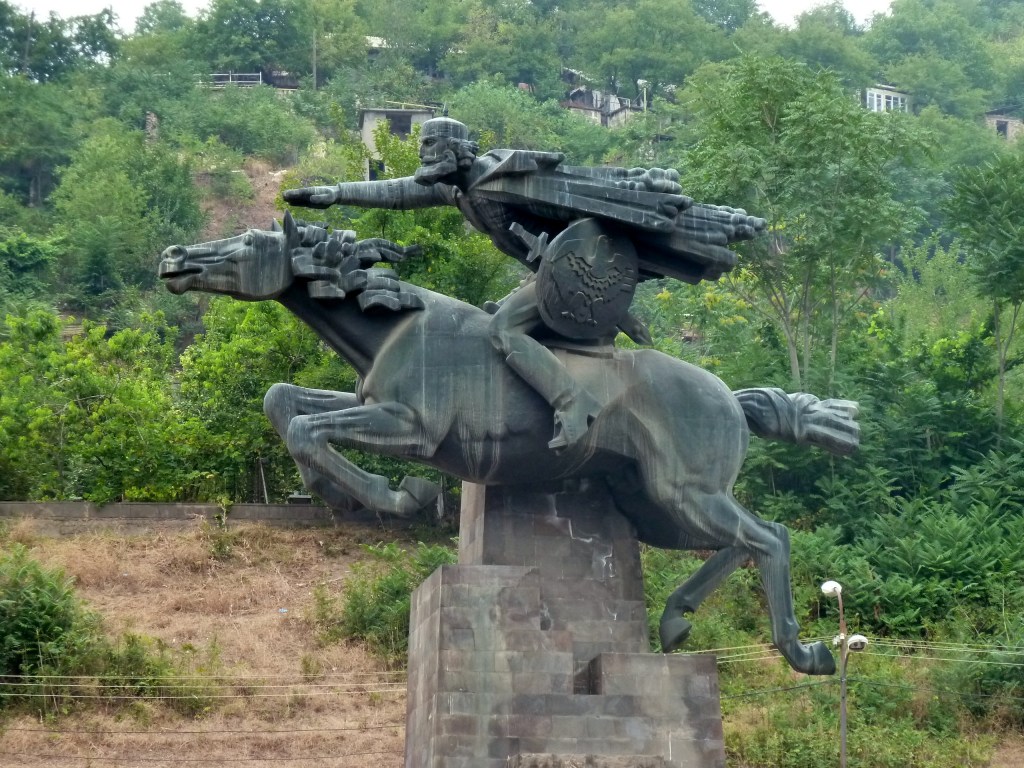
The Armenian composer Armen Tigranian (1879–1950) was also a sociocultural activist. His opera Anoush (1912), called the “national opera of the Armenian people,” is a social drama inspired by Armenian folk music and culture. He began work on his second opera, David Bek, in 1941, but he never completed it or finished the orchestration. After he died, the opera was completed by Levon Khoja-Eynatyan and G. Budaghyan, and the libretto was developed by Aram Ter-Hovhannisyan.
Like Anoush, David Bek is a social drama about the early18th-century Armenian military commander David Bek and his leadership during the Armenian rebellion against Persia and the Ottoman Turks. Tigranian based the story of the opera on the novel by the Armenian writer Raffi.
Phil of Phil’s Opera World wrote, “Tigranian’s musical style is rather conservative, at times resembling late-19th century conventions . . . although at other times sounding much more obviously from the 20th century (marches in particular, the usage of the brass instruments, much of the music would sound perfectly at home in a film score), with strong Armenian and Georgian elements appropriate to the setting of the opera. . . . Tigranian died in February 1950, leaving the opera completed in short score. It was then orchestrated and first performed in November of the same year. The first two acts are comparatively brief, combined being shorter than the massively long third act (which consists of over half of the entire opera!). . . . Although it has never approached the success of Anoush and has only ever been performed in Armenia, apart from a production in Moscow during the 1950s, in some ways it is more eclectic and refined, although it suffers from the fact that the title character is a comparatively minor role (and who doesn’t even die in the opera!), and from having a massive final act in comparison to the brief first two acts.”
The choral and orchestral writing in David Bek shows Tigranian to be a true master of both. The music is accessible throughout and is really beautiful, but the lopsidedness of the drama is seen by many musicologists as a weakness. Performances of individual arias have been praised, and it is wonderful that recordings of this important 20th-century addition to the opera repertoire are available for us to enjoy.
My classical music post for today is Armen Tigranian: David Bek: Act 1 scene 1.


Leave a Reply