

Happy New Year! I’ll be taking a break from writing new posts this month, but never fear, there will still be a Daily Classical Music Post! This January, I’ll be sharing some DCMPs from Januarys in the past. And stay tuned for a whole new theme in February!
First posted January 2015
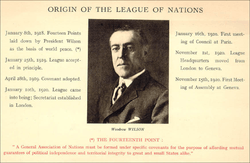
On 10 January 1920, through the Treaty of Versailles, the League of Nations came into existence.
The White Gulls (Song No. 113)
Fifty nations entered into this covenant, through which it was hoped that war would be avoided. The U.S. president at the time, Woodrow Wilson, felt that the League was a vital organization and made it one of his Fourteen Points for Peace. The United States never joined the League of Nations, however, and it was dissolved on 18 April 1946. The main U.S. objection to the League was Article X: “The Members of the League undertake to respect and preserve as against external aggression the territorial integrity and existing political independence of all Members of the League. In the case of any such aggression or in case of any threat or danger of such aggression the Council shall advise upon the means by which this obligation shall be fulfilled.”
In 1921, the American composer Charles Ives (1874–1954) wrote one of his most depressing and beautiful songs, The White Gulls S. 391. Ives was a strong supporter of world government—he called his idea the People’s World Nation—and he was absolutely devastated by the failure of the United States to join the League. He wrote The White Gulls, with a translation of a Russian text, as a response. According to the All Music Guide, “The song is slow, dark-toned, and ominous. Its chords mostly lie below the middle of the treble clef; that is in the octave just above middle C and lower. For the most part the chords are complex and chromatic. The only consistent high notes are a plaintive slow figure that sketches a chord in fifths: F, G (a ninth higher), and down to C.”
My classical music post for today is Charles Ives: The White Gulls.


Leave a Reply