

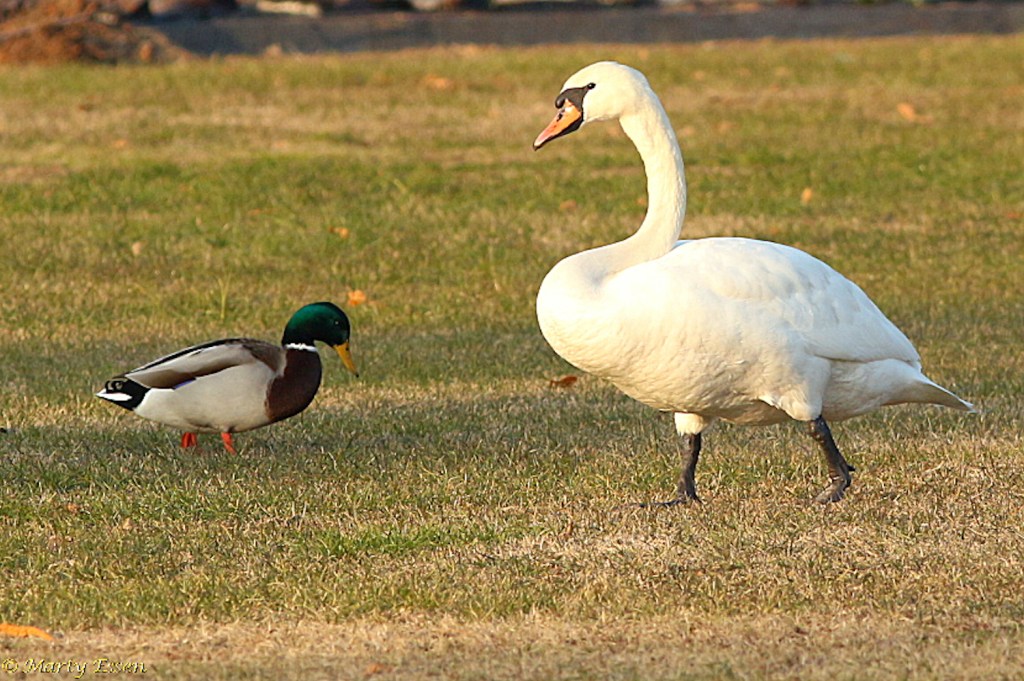
December is a month for reflection, a time to look back on the past year before looking ahead to the new one. In 2025, there was so much great music to share that I wasn’t able to fit all of it in! So this December, the Daily Classical Music Post will revisit the theme for each month and share a few of the works that didn’t make the cut.
S.Prokofiev “The Ugly Duckling”,
[April 2025: A is for April, and it’s also for Animals! This April, the Daily Classical Music Post explores music celebrating the animal kingdom.]
“I don’t have ugly ducklings turning into swans in my stories. I have ugly ducklings turn into confident ducks.”—Maeve Binchy
Today’s post is a twofer: yes, it’s about a duckling, but that duckling turns out to be a swan! This doesn’t occur in real life, but it’s nice that the Danish author Hans Christian Andersen made it happen in his fairy tale.
The Russian composer Sergei Prokofiev (1891–1953) may have seen himself in Andersen’s story of the ugly duckling who grew into a beautiful swan. In 1914, Prokofiev wrote The Ugly Duckling (Гадкий утенок) Op. 18 for voice and piano. In 1932, he arranged it for voice and orchestra. In 1996, the Russian composer and conductor Len Konov adapted it as an opera. I have read that Maxim Gorky loved the original version—he thought that it was a reflection of Prokofiev’s career (the unkind animals were the critics of Prokofiev’s music and the little duckling was Prokofiev).
Victor Carr Jr wrote, “Composed just prior to his opera The Gambler, it shares much of that work’s musical character—meaning that while there’s an overall lightness and phantasmagorical quality, it’s certainly not children’s music (no Peter and the Wolf here). Angular yet beautiful melodic fragments come and go as in a dream, and the orchestration is as bright and colorful as you would expect.” Some scholars have argued that the heavy instrumentation used to depict the “ugly duckling” makes it impossible for a light-voiced performer to be heard, and there are alternative versions available, including one for chamber orchestra.
My classical music post for today is Sergei Prokofiev: The Ugly Duckling.


Leave a Reply