

December is a month for reflection, a time to look back on the past year before looking ahead to the new one. In 2025, there was so much great music to share that I wasn’t able to fit all of it in! So this December, the Daily Classical Music Post will revisit the theme for each month and share a few of the works that didn’t make the cut.
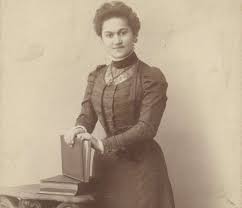
Leokadiya Kashperova: Piano Concerto in A minor, Op.2 (1900)
[January 2025: William Cosgrove famously said, “Music hath charms to soothe a savage breast.” At this pivotal moment in the world’s history, the Daily Classical Music Post explores music by composers who ran afoul of tyrants and dictators and who as a result were banned, imprisoned, or executed. We’ll also listen to some music by composers who criticized the regime under which they worked but managed to fool the ruler.]
The Russian pianist and composer Leokadiya Kashperova (1872–1940) was highly regarded before the Russian Revolution both for her piano playing and teaching (she taught Igor Stravinsky) and for her compositions. In 1916, while teaching at the Smolny Institute, she met the Bolshevik leader Sergei Andropov. They fell in love and married that year. Kashperova was a member of the gentry, and so although she had married a Bolshevik, her music was banned and she was not allowed to perform in public. A year after they married, Kashperova and Andropov went into hiding, as they feared that she could be imprisoned or even sentenced to death.
Paul Griffiths wrote, “In time, the Bolsheviks would buy into the Marxist view of gender equality though in reality the life of the new Soviet woman was as hard as ever, a pale reflection of the muscular heroism of the female figures portrayed in those Communist propaganda posters. I have found no evidence of Kashperova giving any concerts between 1916 and 1920; these were very difficult and dangerous times. In fact, even after her arrival in Moscow, and living in close proximity to the Conservatoire, she appears to have given no public performance of her own music during the last twenty years of her life.” Kashparova continued to compose, albeit in secret, and none of her works were performed in her lifetime or for many years after her death.
Alexandra Dariescu wrote about Kashperova’s Piano Concerto in a minor, “Composed in 1900, this is the only concerto she ever wrote: it’s dark, sombre, romantic and full of tunes in the same vein as Rachmaninov’s Second Piano Concerto, written in the same year. Kashperova had huge hands, so the span is enormous—as if written for male hands, not female ones—and there’s a singing quality to the music, particularly in the second movement, which showcases the beauty of tone for which Kashperova was well-known.”
My classical music post for today is Leokadiya Kashperova: Piano Concerto in a minor.


Leave a Reply