

December is a month for reflection, a time to look back on the past year before looking ahead to the new one. In 2025, there was so much great music to share that I wasn’t able to fit all of it in! So this December, the Daily Classical Music Post will revisit the theme for each month and share a few of the works that didn’t make the cut.
Mikhail Nosyrev : Cello Concerto(1973)
[January 2025: William Cosgrove famously said, “Music hath charms to soothe a savage breast.” At this pivotal moment in the world’s history, the Daily Classical Music Post explores music by composers who ran afoul of tyrants and dictators and who as a result were banned, imprisoned, or executed. We’ll also listen to some music by composers who criticized the regime under which they worked but managed to fool the ruler.]
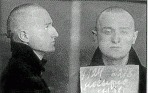
The Soviet composer Mikhail Iosifovich Nosyrev (1924–1981) was a violinist as well as a conductor, and was well regarded in Leningrad in the early 1940s. However, in 1943, he was arrested and sentenced to death by firing squad for treason. He was reported by his teacher at Leningrad Conservatory, perhaps because the teacher was jealous of Nosyrev’s talent. One month after his arrest, his sentence was reduced to 10 years’ imprisonment in Vorkuta. While he was there he was able to continue to play the violin as concertmaster of the camp orchestra. He also composed a few works, mainly for piano. In 1953, upon his release from prison, he took a job as conductor of an orchestra in Syktyvkar. He became conductor of the Voronezh State Opera and Ballet Theatre in 1958. In 1967, he was finally admitted to the USSR Union of Composers, mainly as a result of the efforts of Dmitri Shostakovich. In gratitude, Nosyrev dedicated his second symphony, composed in 1977, to Shostakovich.
In 1988, seven years after his death, Nosyrev was finally exonerated of the charge of treason by the Supreme Court of the USSR. It was too late for him, but at least it allowed people to begin to rediscover his wonderful music and play it openly. Per Skans wrote, “My jaw dropped when I became acquainted with Mikhail Nosyrev’s music. . . . The reason was not only the outstanding technical level of this music . . . but also the dramatic instinct which permeates every bar of Nosyrev’s scores. To me it seems a wonder that a composer was able to write such music after having suffered such hardships as are described in his curriculum vitae. This is something very rare, and it reveals that Mikhail Nosyrev had not only an unusual musical talent, but also a human greatness of a rare kind.”
John Warrack wrote that Nosyrev’s Concerto for Cello and Orchestra (composed in 1973) “is an altogether graver and sadder work despite the lively central theme and variations. On either side lie two beautifully sustained Adagios, drawing on simple melodic phrases. . . . It is a powerful, moving work.”
My classical music post for today is Mikhail Nosyrev: Concerto for Cello and Orchestra.


Leave a Reply