

There are two categories of classical music that use visual art as the subject of the composition. “Inspired-by” music takes a work of art as a notional starting point, whereas “ekphrastic” music aims to comment on or illuminate the visual artwork. This November, the Daily Classical Music Post will explore music based on visual art from the Renaissance to the 21st century.
Luboš Fišer – 15 Prints after Dürer’s Apocalypse (1965) [Score video]
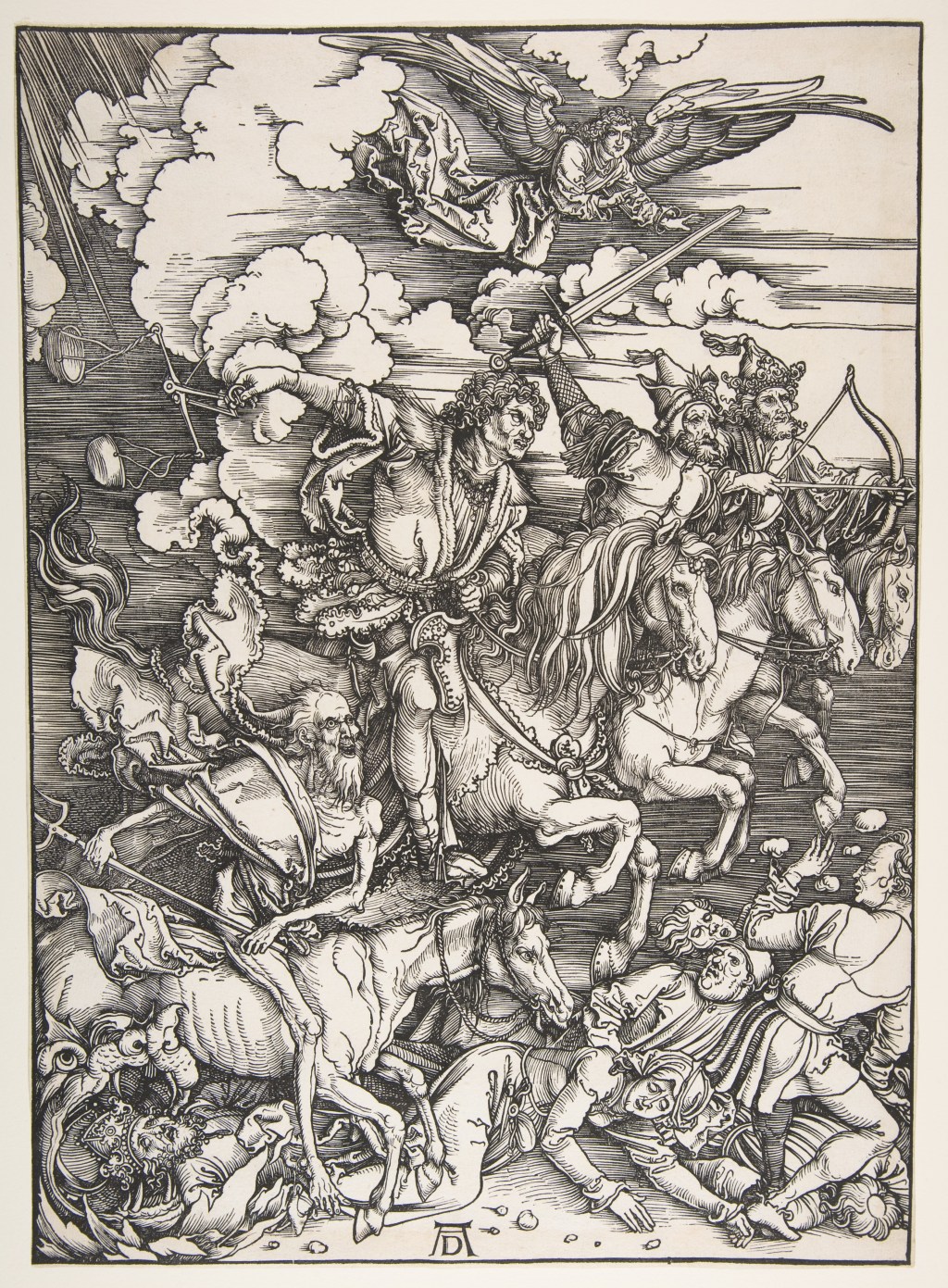
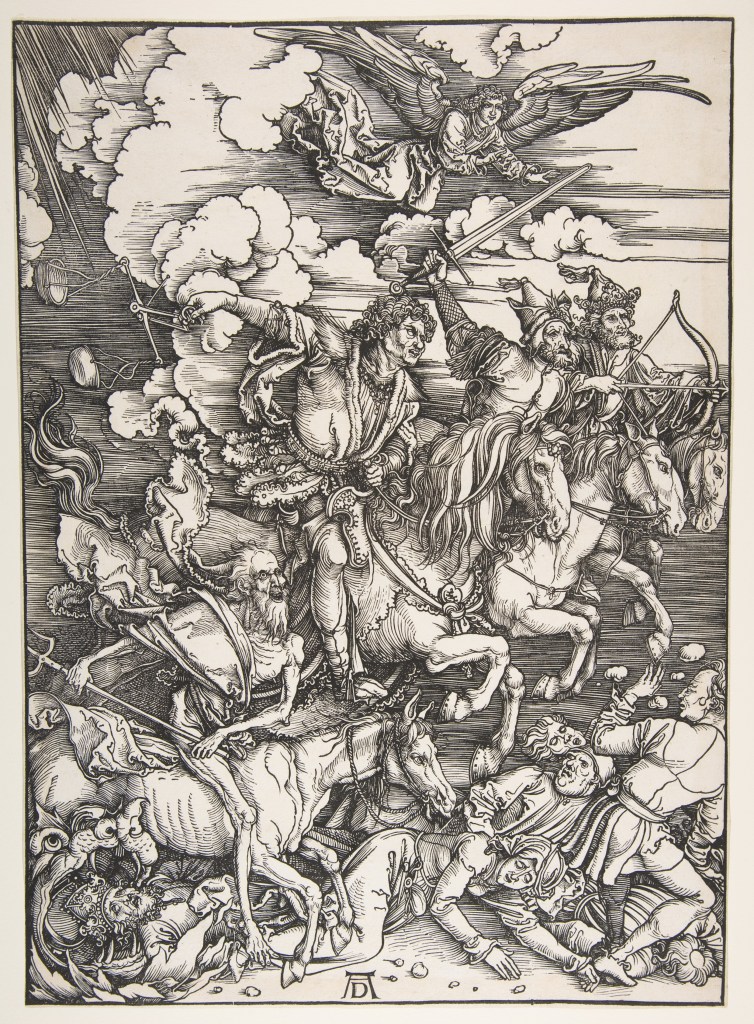
The German Renaissance artist Albrecht Dürer is known particularly for his woodcuts and engravings, which were greatly admired by his contemporaries. One of his most well-known collections of woodcuts is his 1498 printed book Apocalypse with Pictures, containing text and 15 images. The most famous of the woodcuts is the third one, The Four Horsemen, which is based on the Book of Revelation 6:1–8. An exhibition catalogue from the Metropolitan Museum of Art in New York said, “Transforming what was a relatively staid and unthreatening image in earlier illustrated Bibles, Dürer injects motion and danger into this climactic moment through his subtle manipulation of the woodcut. The parallel lines across the image establish a basic middle tone against which the artist silhouettes and overlaps the powerful forms of the four horses and riders—from left to right, Death, Famine, War, and Plague (or Pestilence). Their volume and strong diagonal motion enhance the impact of the image, offering an eloquent demonstration of the masterful visual effects Dürer was able to create in this medium.”
The Czech composer Luboš Fišer (1935‒1999) was known for his contemporary classical music as well as film scores. His music is intense and blends modernist and traditional techniques. He won many awards and is considered to be one of the most important Czech composers of the later 20th century.
15 Patnáct listů podle Dürerovy Apokalypsy (15 Prints after Dürer’s Apocalypse) was composed in 1965. Michael Morrison wrote, “Awarded the 1966 Prize of the Guild of Czechoslovak Composers, this ten minute piece is indeed fifteen contrasting but closely related episodes which the composer describes as prints. They are not a theme and variations set but rather more like a suite; each is unique with parameters of precisely defined time limits but each also allows great liberties in performance. The melodic and harmonic elements in all of the fifteen sections are derived exclusively from a basic six-note theme. The composer insists the work is not a series of musical evocations and in that regard does NOT resemble the Mussorgsky work, Pictures at an Exhibition. It is powerfully scored for conventional orchestral forces augmented with creative percussive effects and a harpsichord and while much of the piece is dissonant and aggressive, it seems rooted in tonality and is rhythmically consistent within the separate parts.”
My classical music post for today is Luboš Fišer: 15 Patnáct listů podle Dürerovy Apokalypsy.


Leave a Reply