

There are two categories of classical music that use visual art as the subject of the composition. “Inspired-by” music takes a work of art as a notional starting point, whereas “ekphrastic” music aims to comment on or illuminate the visual artwork. This November, the Daily Classical Music Post will explore music based on visual art from the Renaissance to the 21st century.
Yojo Christen : Piano sonata n°1 (2008)
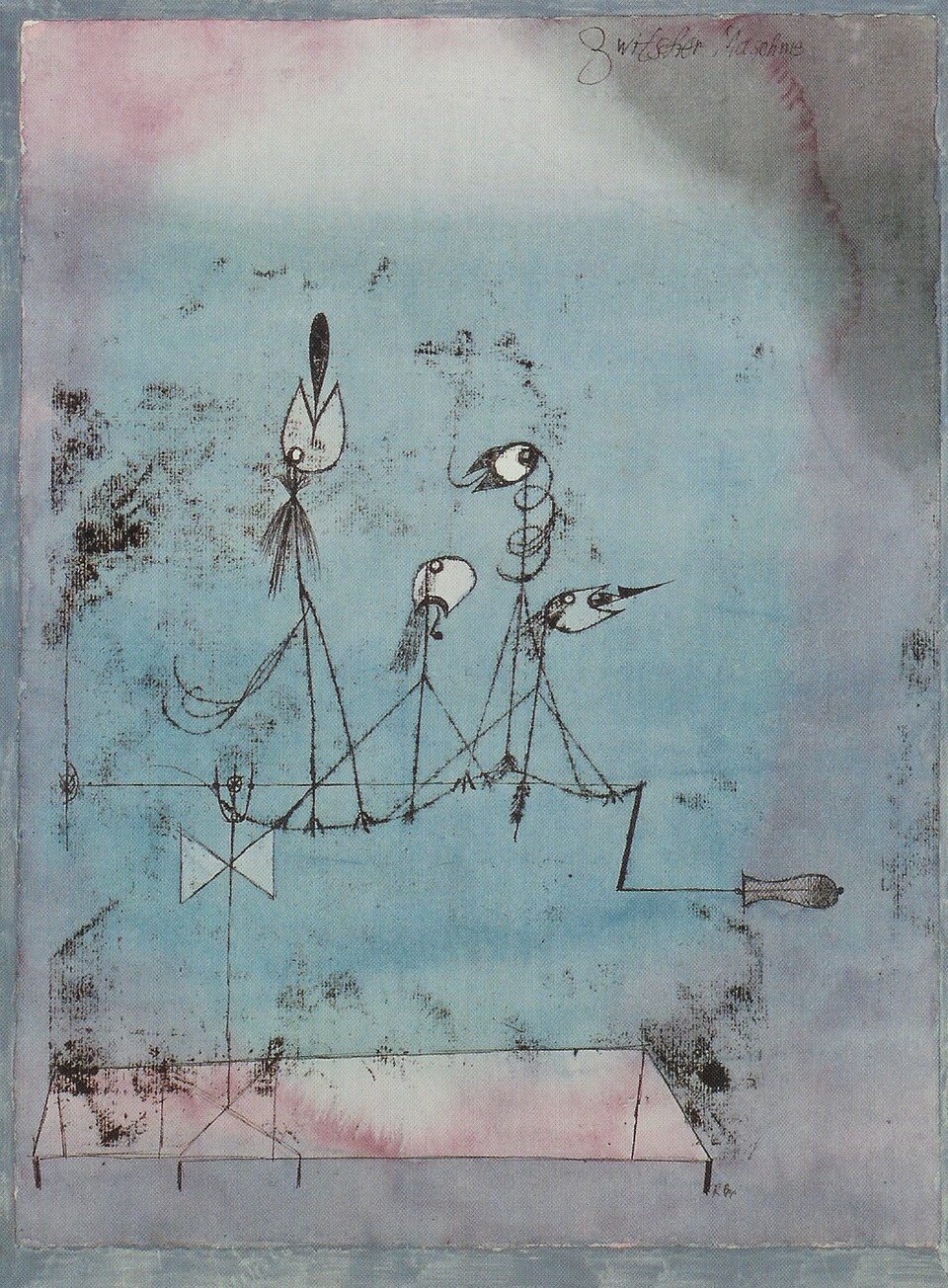
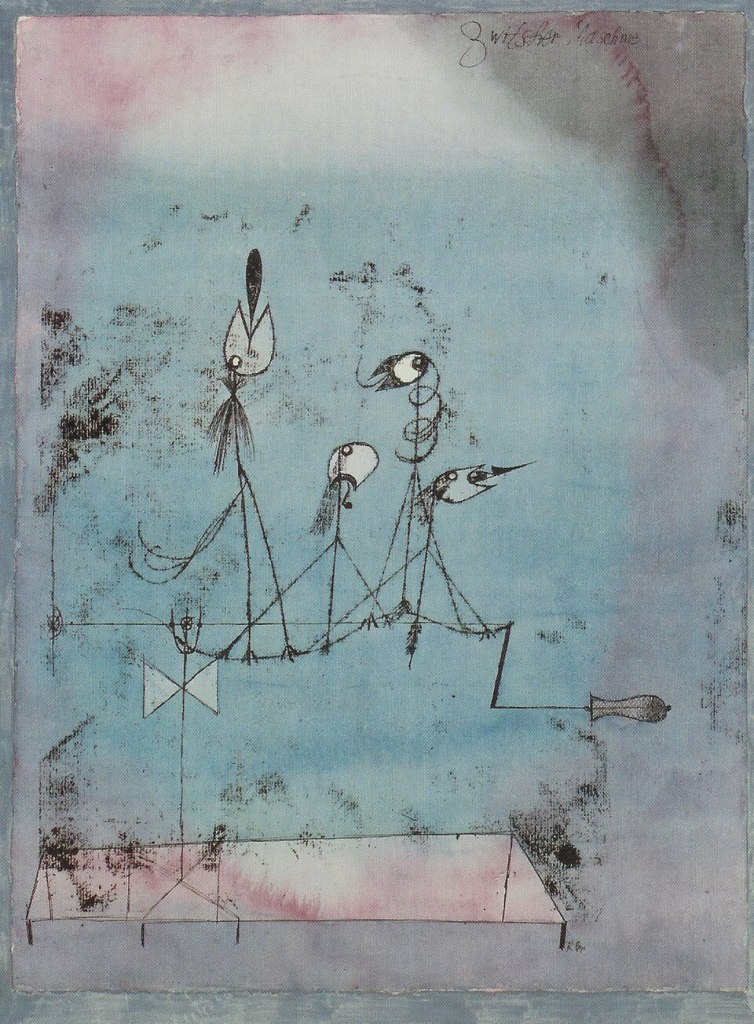
The Swiss-German painter Paul Klee is one of my favourite artists, and his 1922 watercolour Twittering Machine (Die Zwitscher-Maschine) is one of my favourite artworks. This gouache, pen-and-ink, and oil transfer on paper depicts a group of birds on a wire that is connected to a crank of some sort. Various interpretations have been put forward. Some say that the artwork is a depiction by Klee of his own helplessness, others that it shows the triumph of nature over the mechanical.
Several composers have been inspired by Twittering Machine, perhaps more than any other single piece of art. Giselher Klebe composed Die Zwitschermaschine in 1951, considered to be the first musical interpretation of the artwork, and since then more than 100 compositions for orchestra, chamber ensemble, solo instruments, and even rock band (The Grateful Dead’s Jerry Garcia composed his own tribute to Klee’s work) have been written.
The German composer and virtuosic pianist Yojo Christen (born 1996) achieved great success with his Piano Sonata No. 1 (Twittering Machine), written in 2008. Christen’s interpretation begins with virtuosic shimmering runs and glissandos, and high repeated notes and trills are reminiscent of bird chattering and cheeping. Strong chords give way to a more gentle and quiet section, with chattering interspersed with slower runs. Glissandos return and lead into a section of chords that sound like a machine or engine starting, or perhaps it is just the crank being turned. This morphs into a jazzy interlude before the glissandos and chattering returns once more. The sonata ends with low growling notes over a sustained pedal.
My classical music post for today is Yojo Christen: Piano Sonata No. 1 (Twittering Machine).


Leave a Reply