

Music is a journey, taking listeners on an emotional and sometimes adventurous sonic path through time to new places both physical and spiritual. Some composers have chosen actual methods of transportation as their theme for this excursion. This October, the Daily Classical Music Post will feature music celebrating methods of transportation, from the land to the sea to the air.
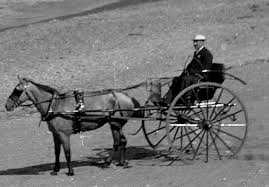
The horse and buggy was one of the earliest forms of transportation. Horse-drawn vehicles similar to the buggy can be traced back to ancient Mesopotamia. Chariots, which most scholars believe were the first wheeled vehicles, carried one or two people who usually stood through the journey. Soon larger vehicles were built, able to carry larger groups of people, and teams of horses were used for these larger vehicles. But the simple one-horse buggy was the favoured method of transportation until the rise of the railways and the automobile. Today, it is still the primary method of transport in Amish communities. The horse and buggy also is used for romantic and tourism purposes.
The American composer Leroy Anderson (1908–1975) was a master of light orchestral music. Many of his compositions are instantly recognizable, including Sleigh Ride, The Syncopated Clock, and The Typewriter. He received a star on the Hollywood Walk of Fame in 1960. His style has been described as distinctive and eclectic, and he communicates his musical ideas perfectly through his use of different instruments, particularly percussion and brass, to help audiences visualize the subjects of his works.
Anderson composed Horse and Buggy for orchestra in 1951. Right from the first notes, you can hear the clip-clopping of the horse and the whip of the buggy driver. As with all of Anderson’s music, he captures his subject matter brilliantly. Jonathan Woolf called this piece an excellent example of Anderson’s “spruce, clean limbed Americana.” The description on the publisher’s website says, “Like Anderson’s signature piece Sleigh Ride, Horse and Buggy is another example of his extraordinary ability to sketch a nostalgic scene in sound on a small canvas without a wasted motion. Here, a different horse pulls a different vehicle through a vanished landscape of long ago.”
Aaron Marx wrote, “There is the atmospheric rustling of anticipation in the very beginning as we prepare to depart, then the peppy first and second themes which illustrate our initial delight as the horse takes off. And then, in the middle, that most enchanting lyrical theme presented by the solo horn, and then the strings. Can you hear the horse slow down there? I always thought this part felt like finding a lovely view and slowing the horse to take in the scenery as time slowed down in the best way. . . . But, enough of that; let’s crack the whip and have the horse resume its brisk trot.”
My classical music post for today is Leroy Anderson: Horse and Buggy.


Leave a Reply