

Music is a journey, taking listeners on an emotional and sometimes adventurous sonic path through time to new places both physical and spiritual. Some composers have chosen actual methods of transportation as their theme for this excursion. This October, the Daily Classical Music Post will feature music celebrating methods of transportation, from the land to the sea to the air.
Ibert: Suite Symphonique: 1. Le Métro
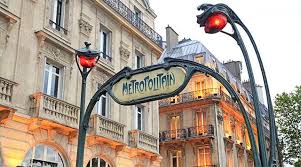
The rapid transit system in Paris, called the Métro (short for Métropolitain), opened in the summer of 1900. The Métro is the second-busiest system in Europe, and the name has been used for other rapid transit systems in France and around the world; “metro” has come to mean an urban transit system that is mostly underground. The lines of the Paris Métro are identified by number and colour, and many of the historical entrances have signage influenced by the Art Nouveau style.
The French composer Jacques Ibert (1890–1962) did not follow any specific style in his music; he preferred to experiment, and his works fit into many genres. He composed operas, ballets, incidental music for plays and films, and orchestral and instrumental music. In 1930, he composed incidental music for a play by Jules Romains. He used this music as the basis for his Suite Symphonique (1930), sometimes called Suite Symphonique “Paris.”
Ibert wrote in his programme notes, “The various sketches which form this work have been taken, for the most part, from the score of Jules Romains’ play ‘Donongo’ which was presented at the Theatre Pigalle in Paris in 1930. . . . By grouping them in a suite form, the composer wishes to express musically the different faces of Paris. . . . I. The Metro—Eight o’clock in the morning. The crowd crushes toward the platform. The trumpet sounds the signal for departure. The train gets under way. The mob sits passively as the underground journey begins.”
Suite Symphonique is in six movements: 1. Le métro; 2. Faubourgs; 3. La mosquée de Paris; 4. Restaurant au mois de Boulogne; 5. Le paquebot “Ile-de-France”; and 6. Parade foraine. Ibert’s aim was to capture the sights and sounds of Paris. Tim Ashley wrote, “The Suite symphonique, ‘Paris’ swerves garishly between the mechanism of Pacific 231 [an orchestral piece by Arthur Honegger] and the classiest of foxtrots and waltzes in its depiction of a teeming metropolis.” Richard Fairman wrote, “The Suite symphonique ‘Paris’ works in the rumble of the Métro, a foxtrot and a barrel organ.”
My classical music post for today is Jacques Ibert: Suite Symphonique, 1. Le Métro.


Leave a Reply