

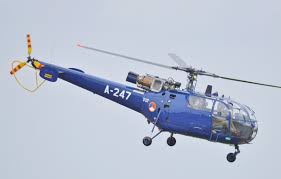
Music is a journey, taking listeners on an emotional and sometimes adventurous sonic path through time to new places both physical and spiritual. Some composers have chosen actual methods of transportation as their theme for this excursion. This October, the Daily Classical Music Post will feature music celebrating methods of transportation, from the land to the sea to the air.
Stockhausen: Helikopter-Streichquartett
The idea of a flying machine that could take off vertically was first conceived in 12th-century China. This machine, the “flying top,” was really just a toy, but people began to dream of a device that could carry people. Leonardo da Vinci’s “aerial screw” wasn’t ever built, but the plans that he drew up in the late 15th century laid the groundwork for further development. The Giffard Helicopter, built in 1841, came close to actual flight, but it wasn’t until 1863 that Etienne Oehmichen built and flew the first successful powered helicopter, the “Oehmichen No. 2.” Forty years later, the first helicopters to carry people were built, and aviation changed forever.
Now that we all know about the history of helicopters, I will attempt to explain why the German composer Karlheinz Stockhausen (1928–2007) composed a string quartet in which each member goes up in their own helicopter. Philip Clark said, “When word went round the contemporary music community that Stockhausen was sending the Arditti Quartet up in helicopters there were some who said he was touched by genius. Others reckoned he was just touched.” Apparently, Stockhausen had always been interested in the concept of spatially distributed ensembles (as in his 1957 work Gruppen for three orchestras), and the Helikopter-Streichquartett was just the (to him, anyway) logical extension of this dream.
The logistics involved in performing the Helikopter-Streichquartett were, as can be imagined, almost insurmountable. In fact, the Austrian Green Party managed to prevent the planned premiere from happening, saying that it would be “absolutely impossible for Austrian air to be polluted by performing this Stockhausen.” The Salzburger Festspiele had commissioned the piece in 1991 and the original premiere was to take place in 1994, but in the end it was the Holland Festival that presented this extraordinary work to the public, in June 1995. It is important to note that the pilots of the helicopters are listed as performers as well. It was part of Stockhausen’s vision that the string quartet played tremolos to blend with the rotor blades, making the helicopters sound like musical instruments as well.
A moderator introduces the piece, and then the string quartet goes outside and boards their individual helicopter. Video cameras follow the performers throughout, and the images and sounds are transmitted back to the audience in the concert hall. Although Helikopter-Streichquartett has been called “memorable,” it also has been seen as, perhaps, a bit too outlandish and a symbol of the excesses of German experimentalism.
My classical music post for today is Karlheinz Stockhausen: Helikopter-Streichquartett.


Leave a Reply