

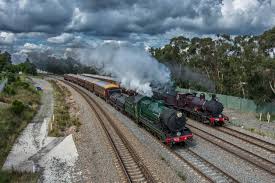
Music is a journey, taking listeners on an emotional and sometimes adventurous sonic path through time to new places both physical and spiritual. Some composers have chosen actual methods of transportation as their theme for this excursion. This October, the Daily Classical Music Post will feature music celebrating methods of transportation, from the land to the sea to the air.
Clarke: Great Train Race for Solo Flute
The first trains evolved from wheeled carts and 16th-century horse-drawn wagonways in the early 19th century with the invention of the steam locomotive. Railways expanded quickly, as they were ideal for transporting goods and people. Beginning in the late 19th century, train races were held, often as publicity stunts. Some of these races were between trains, and others were between a train and another type of transportation such as a horse or an automobile.
The British flutist and composer Ian Clarke (born 1964) originally read mathematics at the London School of Economics before taking a year off to focus exclusively on studying and playing the flute (he studied with my flute teacher, Kate Lukas). He then completed his mathematics degree at Imperial College. Clarke performed in a rock band while also teaching and performing classical flute. He also began composing, writing for solo flute, flute and piano, and flute ensemble. All of his works explore the capabilities of the flute, often pushing the instrument and performer to try new techniques.
The Great Train Race (1993) for solo flute is an extraordinary work. The description on Clarke’s website says, “A highly entertaining extended technique showpiece that sounds like its title! Subtitled ‘The Flute As You Don’t Usually Hear It!’, it has proved extremely popular with audiences and players alike. Techniques include: residual/breathy fast tonguing, multiphonics, singing & playing, lip bending, explosive harmonics and an optional circular breathing section. A forward with explanations of the techniques is given along with fingerings in the score for easy reference. The multiphonics used are of the more friendly variety; seven from only four different fingerings.”
Stephen Brookes wrote, “Ian Clarke’s ‘The Great Train Race’ [is] a wild little tone painting for solo flute that draws on just about every extended technique in the book, from key taps to the almost impossible circular breathing.” Kathryn Watson wrote, “The inspiration for this piece came to Clarke while he was rehearsing with his rock band, and his producer told him he was playing ‘too pretty’. After exploring some of the grittier sounds of the flute, he noticed it reminded him of a steam engine. . . . This short solo piece does take the performer and listener on quite a fun journey.”
My classical music post for today is Ian Clarke: The Great Train Race.


Leave a Reply