

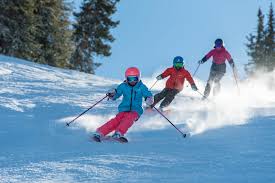
The myth that athletes are the “cool kids” and classical musicians are not is constantly repeated in popular culture, as if these two groups are in opposition. However, many classical composers not only loved to watch and play sports, they also immortalized that love in their music. This September, the Daily Classical Music Post explored classical music about sports.
Faustin Jean-Jean – “Ski-Symphonie” Flute Quartet
Downhill skiing is a physically demanding sport that requires strength, flexibility, endurance, fitness, good anticipation, and reflexes. Recreational skiers average 25 mph (40.23 km/h) and Olympic racers can reach speeds up to 95 mph (152.89 km/h).
The French composer Faustin Jeanjean (1900–1979) was known for his film music as well as light classical music. He played trumpet and cornet, and was a member of several jazz and swing bands. His classical music output included songs, chamber music, works for orchestra and wind ensemble, and two unusual quartets: the Quatuor pour saxophones, co-written with his brother Maurice, and Ski-Symphonie pour quatre flûtes (1990).
The publisher of Ski-Symphonie wrote, “Approximately five minutes in length, Ski-symphonie is a fast paced quartet comprised of scalar and arpeggiated flourishes. Jeanjean demands great technical facility, stunning long phrases, as well as an overall sense of maturity throughout the virtuosic passages.”
Like many of Jeanjean’s other works, the music of Ski-Symphonie describes the title of the work perfectly. The harmonies are shimmering, conveying a sense of schussing down the slopes with the sun reflecting off the snow. The four flute lines weave back and forth, and the listener gets the sense of snow powder being tossed up behind the skiers. The slower central section could be describing a slightly less steep slope or the chair lift ride back up to the top of the ski hill before the music of the first section returns, and the skiers hurtle down the mountain again.
My classical music post for today is Faustin Jeanjean’s Ski-Symphonie pour quatre flûtes.


Leave a Reply