

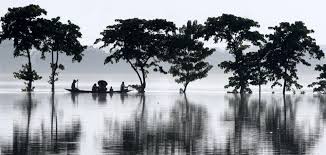
“Everybody talks about the weather, but nobody does anything about it.”—Charles Dudley Warner
Classical music composers may not do anything about the weather, but they often have been inspired by weather and other natural phenomena. This August, the Daily Classical Music Post will explore some of these works and learn about the ways that different combinations of instruments can depict storms, volcanic eruptions, and climate change.
Raga Mian Ki Malhar (Original)
In the Western classical music tradition, composers usually depict storms through the use of frantic strings, loud percussion, winds playing in high registers, and agitated tempos. Indian classical music takes a very different approach when representing weather events through the use of the classical raga system.
C. Uberoi wrote, “The Indian classical music tradition features numerous references to meteorological events that dominate the seasonal rhythm of Indian society: the annual monsoons. The monsoon winds bring life-giving rain across India, blowing from the southwest in summer and the northeast in winter. Monsoons are dynamic weather events, showing variety in the whoosh of winds, cloud formations, and stormy and shiny periods.”
In Indian classical music, a raga consists of at least five notes, and those notes set the atmosphere. While it is true that a particular standard and pattern in the music must be followed, it is important to note that within the framework of the raga is the practice of improvisation. And this is where Indian classical music really shines. In this sense, each performer composes in real time. The skill and musical knowledge required is incredible.
Ragas inspired by the onset of monsoon season are classified as Raga Malhar. People believe that singing or playing one of these ragas can make the rains come. They are also performed to celebrate the arrival of the monsoon. Miyan Ki Malhar, one of the most well-known of the monsoon ragas, is particularly associated with torrential rains. This raga was created by Miyan Tansen (c. 1493–1589), one of the most influential Hindustani classical musicians, revered as the founder of many North Indian regional music schools (gharana). George Howlett wrote, “Derived from the Sanskrit for ‘banishing uncleanliness’, the Malhar family is inextricably linked to the rejuvenating effects of rain. The main raga of this lineage is named ‘Miyan ki Malhar’ for its fabled connections to Miyan Tansen, the great composer of Emperor Akbar’s 16th-century royal court, who is said to have sung it to summon the monsoon to their drought-stricken kingdom.”
My classical music post for today is Raga Miyan Ki Malhar.


Leave a Reply