

“Everybody talks about the weather, but nobody does anything about it.”—Charles Dudley Warner
Classical music composers may not do anything about the weather, but they often have been inspired by weather and other natural phenomena. This August, the Daily Classical Music Post will explore some of these works and learn about the ways that different combinations of instruments can depict storms, volcanic eruptions, and climate change.
Monteverdi: Zefiro torna e di soavi accenti – Fouchécourt, Padmore
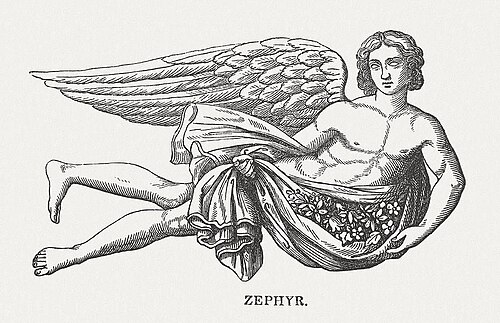
In Ancient Greece, there were four minor gods who were in charge of the wind: Notus, bringer of the south wind and summer and autumn storms; Eurus, the southeast (or maybe east) wind, not related to any season; Boreas, the north wind and bringer of cold winter air; and Zephyrus, the west wind, bringer of spring and early summer wind. The latter is the most gentle and therefore most favoured of the winds, and in mythology often is associated with unrequited love.
The Italian composer Claudio Monteverdi (1567–1643) composed two different settings of poems that celebrated Zephyrus, one to a text by Petrarch in 1614 and one to a text by Ottavio Rinuccini in 1632. The latter madrigal, scored for two tenors and continuo, is the first known example of a vocal duet with a ciaccona accompaniment. Stephen Eddins wrote, “Here, as in many of his madrigals, Monteverdi’s exceptionally fluid text-setting skillfully subverts the structure of the sonnet so that its poetic effusions seem spontaneously improvised rather than constructed according to strict formal standards. The catchy repeated figure of the ciaccona, the springy rhythms, and the graceful but florid vocal lines give the work an infectious exuberance.”
Maureen Buja wrote, “One of the most dramatic readings of the anguish of the unrequited lover occurs in Monteverdi’s 1632 setting of Ottavio Rinuccini’s poem ‘Zefiro torna e di soavi accenti.’ The poem begins with a wonderful description of the return of the West Wind (the Zephyr), which brings Spring. The rivers lose their ice, the fine weather comes, the shepherdesses dance, all observed by our poet / lover.”
My classical music post for today is Claudio Monteverdi’s “Zefiro torna e di soavi accenti.”


Leave a Reply