

Thank you to everyone who subscribes to and supports the Daily Classical Music Post. This July, I will be sharing some favourite posts from the DCMP archives. A new theme will begin in August!
First published 24 January 2016
January 2016 is Celebrate 19th-Century American Composers on the Daily Classical Music Post!
Arthur Foote: Suite in d minor, Op. 36 (Part 1 of 2)
Arthur Foote: Suite in d minor, Op. 36 (Part 2 of 2)
As Douglas Shadle says in his recent book Orchestrating the Nation, most present-day concertgoers may never hear any of the 100+ symphonies composed by American composers in the 19th century. To most classical music fans, the 19th century is all about the Russians, the Germans, perhaps some other Europeans, but American music of that time is considered to be popular (e.g., Foster). The first American composer most people will have heard of is Ives.
This January, the Daily Classical Music Post aims to correct this. As the music of so many 19th-century American composers is either lost or not performed, it has not been all that easy to find large-scale works. During this month, you will perhaps discover some music that will pique your interest, and perhaps more ensembles will look into performing something other than the usual European standards!
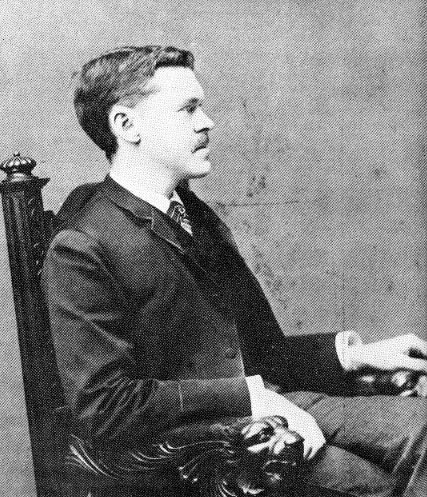
Arthur Foote (1853–1937) was one of the Boston Six. Nicholas Tawa said, “Arthur Foote was one of the most important American composers in the last quarter of the nineteenth century. . . . Several circumstances encouraged a decline in Foote’s musical standing after World War I. Forceful objection to the Germanic ascendancy in American art music grew. . . . In addition, Foote’s empathy with the American music public and his music’s ability to gratify the public’s taste was considered to be pandering to the ignorant and a violation of artistic principles.” Tawa goes on to say that in the late 1990s, people began to reevaluate Foote’s music and discovered “how coherent the music is . . . [they hear an] honest, straightforward sound that brooked no pretentious complexities, no enigmas of meaning.”
Foote was an organist, and the majority of his compositions are for organ, piano, or chamber group. He did, however, write some exciting music for orchestra, of which his Suite in d minor, Op. 36 is a good example. The Boston Symphony Orchestra gave the premiere of this four movement work in 1896. In the program book for the Ann Arbor May Festival in 1899, describing the Suite, which was performed in one of the concerts, the writer says, “Mr. Foote’s compositions are very scholarly, and in all his work one feels that he has been severely critical of himself.”
My classical music post for today is Arthur Foote’s Suite in d minor, Op. 36.


Leave a Reply