

Ask people what genre they think film music is—is it classical? You will get widely varying responses. For some people, film music is a subgenre of classical music; for others, it is a completely separate genre that stands on its own. This June, the Daily Classical Music Post will look at the origins of film music and discover how it has evolved.
Film scores can set the tone for a movie from the very first notes that play while the opening credits roll. We’ve seen this month how futuristic-sounding music conveys a sense of another world in science fiction films; films set in the world of crime often have a jazzy or bluesy feel; and films set in a particular part of the world call to mind folk songs of that region. Film score composers also can draw from a particular historical era to help audiences immerse themselves in a bygone time.
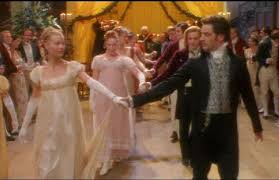
The British composer Rachel Portman (born 1960) made history in 1996 when she became the first woman to win an Academy Award for Best Original Score, for her soundtrack to Emma. When Portman was asked to write the score for this very light, comedic film, she knew she could either take existing classical music from the early 19th century or compose in a similar style but in her own musical voice. She chose the latter path. She said, “[Emma has a] purely classical score. It is an orchestral piece, by which I mean that there is nothing in it that you wouldn’t find in a symphony orchestra. It was influenced by my roots and my classical background.
Portman’s Emma score is similar in some ways to her scores for other romantic comic films: lightly chopping strings, with cellos punctuating dramatic moments and violins taking over for the comedic ones. The melody lines are given to clarinet and oboe, sometimes flute. Portman said in an interview, “Whenever I’m starting a film, if it’s gonna need a melody, I’ve got to crack that melody. And that becomes the thing on which to hang the whole score, from which you take everything else. All other branches come off it. So that was the first thing I wrote. . . . To start and end with it, and to touch on it as you go through the film. It’s like the musical voice of the film, the main musical voice.”
The music for the ball scene (“The Dance”) has a wonderful period feeling as well as a modern freshness. Rachel Hamlette wrote, “‘The Dance’ is pure fun. It makes me want to cavort. Sometimes I do. It’s a little bit repetitive at first, and you can envision people doing an English Country Dance with its fancy patterns, and then about 40 seconds in, it gets louder and boisterous, and yeah . . . who can resist dancing to such music?” Although most reviewers feel that Emma is by no means Portman’s best score, they all agree that it a typical Portman score, with lovely and very memorable tunes.
My classical music post for today is Rachel Portman’s Emma: “The Dance.”


Leave a Reply