

The first day of May is International Workers’ Day. Workers and the labour movements are celebrated worldwide on this day. This May, the Daily Classical Music Post honoured and commemorated the struggles, achievements, rights, and gains of workers through music.
Rzewski plays Rzewski – The people united will never be defeated! – live 1986
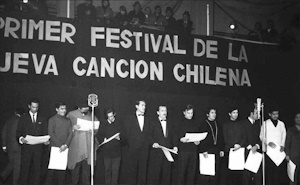
In the 1960s, the Nueva Canción Movement emerged in Chile. This musical protest song movement was a response to social and political inequalities, and in particular to the exploitation of workers. This movement inspired solidarity movements throughout the world. The Nueva Canción Movement had its roots in folk and popular music, but it had an influence on classical music as well.
The American composer-pianist Frederick Rzewski (1938–2021) was a close friend of the Chilean composer Sergio Ortega, who was considered to be one of the most influential musical voices of the Chilean left. Ortega wrote the anthem for the Unidad Popular (Allende’s party), “¡El pueblo unido, jamás será vencido!” (The People United Will Never Be Defeated!). This phrase was a well-known anti-Pinochet chant, and after Pinochet’s military coup that deposed Allende, “¡El pueblo unido, jamás será vencido!” became famous worldwide as a call to resistance.
John Henken said, “In 1975, Rzewski . . . composed a stunning set of 36 variations on [‘¡El pueblo unido, jamás será vencido!’]. Rzewski grouped his variations in six cycles, with each variation a stage of musical development; the six cycles reflect the meta-development of those six stages. The music ranges over lyrical reflections and thorny counterpoint, with a broad palette of extended piano techniques, including singing and whistling.”
Rzewski said, “Two songs, aside from the theme itself, appear at various points: the Italian revolutionary song ‘Bandiera Rossa,’ in reference to the Italian people who in the ’70s opened their doors to so many refugees from Chilean fascism, and Hanns Eisler’s 1932 antifascist ‘Solidaritätslied,’ a reminder that parallels to present threats existed in the past and that it is important to learn from them. After the sixth cycle, the pianist is offered the option of improvising a cadenza. . . . The extended length of the composition may be an allusion to the idea that the unification of people is a long story and that nothing worth winning is acquired without effort.”
My classical music post for today is Frederick Rzewski’s The People United Will Never Be Defeated.


Leave a Reply