

The first day of May is International Workers’ Day. Workers and the labour movements are celebrated worldwide on this day. This May, the Daily Classical Music Post will honour and commemorate the struggles, achievements, rights, and gains of workers through music.
Trumpet Sonata [Chromatic] : III Spirituel
Many types of music help people deal with a difficult work situation. Perhaps the most poignant form is the spiritual, which is a unique type of folksong that developed among enslaved African people in the American South. Spirituals had their roots in both African and biblical traditions, and they were a way for enslaved people to express their feelings through song. Many spirituals included coded messages and helped enslaved people to communicate with each other without their captors knowing what they meant. Frederick Douglass said of spirituals that “they were tones, loud, long and deep, breathing the prayer and complaint of souls boiling over with the bitterest anguish. Every tone was a testimony against slavery, and a prayer to God for deliverance from chains. . . . Those songs still follow me, to deepen my hatred of slavery, and quicken my sympathies for my brethren in bonds.”
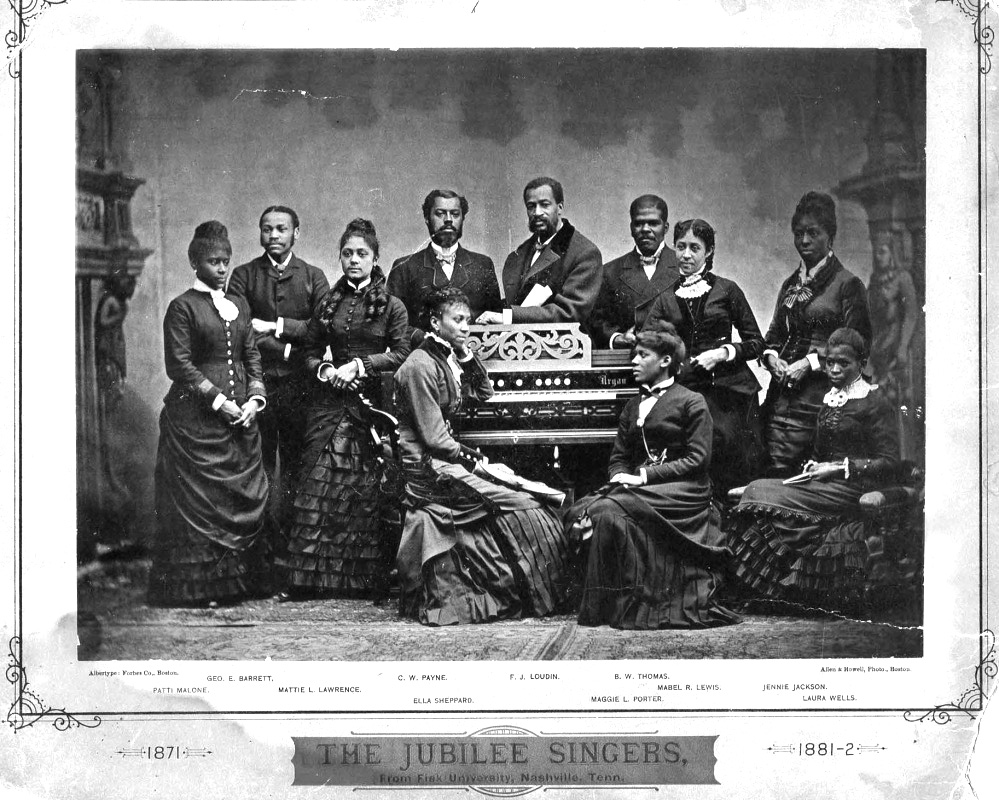
Spiritual music was first sung in the fields before the songs made their way into churches and concert halls. Sandra Jean Graham wrote, “Before the Civil War [spirituals] were sung in the privacy of black spaces—the brush arbor, the praise house, the cotton field, the levee. After the Civil War, however, groups of student singers representing black educational institutions brought spirituals to the concert stage. The impact of hearing spirituals from the lips of people who were formerly enslaved was profound. . . . Spirituals began their transition to the concert hall in 1871 in an effort to save Fisk University from financial ruin. . . . Although the popularization of jubilee songs—as spirituals became known—began with the Fisk singers, it certainly didn’t end with them.”
The French composer Jean Hubeau (1917–1992) wrote in a very simple and straightforward style, but his music often had an underlying important message. His Sonate pour Trompette et Piano (1943) is a beautiful example of this, particularly in the title of the third movement and in the meaning behind its composition. Alex Grey wrote, “The third movement of Jean Hubeau’s Trumpet Sonata is called ‘Spiritual’ and was influenced by the songs sung by enslaved African workers, which in turn gave rise to American blues and jazz music. These songs would have been sung to pass the time and give hope in the most difficult of circumstances. Hubeau composed the piece in 1943 when France was under Nazi occupation. As a result of the occupation, the German occupiers banned all forms of American music, in particular jazz. But despite this, jazz music continued to be played on French radio. I feel like Hubeau believed music could inspire hope even in the darkest of circumstances.”
My classical music post for today is Jean Hubeau’s Sonate pour Trompette et Piano: III. Spirituel.


Leave a Reply