

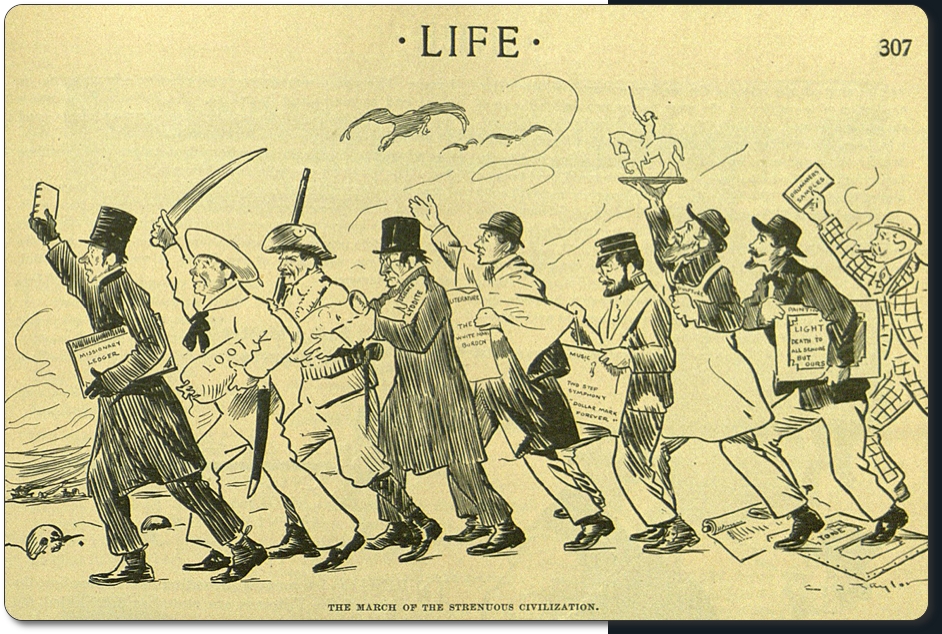
The first day of May is International Workers’ Day. Workers and the labour movements are celebrated worldwide on this day. This May, the Daily Classical Music Post will honour and commemorate the struggles, achievements, rights, and gains of workers through music.
“I wish to preach, not the doctrine of ignoble ease, but the doctrine of the strenuous life, the life of toil and effort, of labor and strife; to preach that highest form of success which comes, not to the man who desires mere easy peace, but to the man who does not shrink from danger, from hardship, or from bitter toil, and who out of these wins the splendid ultimate triumph.”—Theodore Roosevelt, The Strenuous Life (1899)
The “American Dream” of riches and success was not available to everyone. Someone at the turn of the 20th century who knew and understood this very well was the American composer Scott Joplin (1868–1917). Joplin should have been recognized in his lifetime for his extraordinary contributions to classical music (he considered ragtime to be a form of classical music). Instead, he was died in poverty and obscurity; as Felix Cuervo said, “Few black composers existed in those days, yet Scott Joplin would not allow himself to be defeated by prejudice and discrimination, even though he felt he was chasing a dream.”
Joplin composed The Strenuous Life in 1902. Daniel Harrington wrote, “Joplin was politically astute. After hearing future President Theodore Roosevelt’s controversial 1899 speech extolling the virtues of hard work and panning ‘ignoble ease,’ Joplin penned ‘The Strenuous Life’ in Roosevelt’s honor.” And Joplin was philosophical about winning “the splendid ultimate triumph” as a result of his strenuous, hard work; he told a friend, “When I’m dead twenty-five years, people are going to recognize me,” and he wasn’t far off (it took about 30 years).
George G. Haggett wrote, “The Strenuous Life starts in C major and ends, surprisingly, in F major, C’s subdominant. This surprising tonal turn reveals the opening key—what we presumed, because of traditional sonata forms, to be the tonic ‘home’—to actually be the dominant (chord V) of the home key, which we do not reach until the end. While this practice is by no means unheard of in ragtime, the fact that it is unheard of in the genre’s most famous and influential pieces perhaps suggests how discomfiting popular culture found this subversive tonal practice. By tricking us into thinking that our goal is somewhere different to what we thought, perhaps Joplin is making a statement about the harsh reality of Roosevelt’s unattainable American Dream. The under-appreciated victim of the real ‘strenuous life’ and one of capitalism’s burn-outs, Scott Joplin certainly did not ‘shrink from danger, from hardship, or from bitter toil,’ and still ‘the splendid ultimate triumph’ of success was only granted to him when he was long-dead.”
My classical music post for today is Scott Joplin’s The Strenuous Life.


Leave a Reply